
September 9, 2026
Pool Deck Paver Sealing in Florida: What to Check Before Sealing Around Water
Pool deck pavers need careful prep before sealing because water, shade, drainage, and joint sand can all affect the final result. Here is what Florida homeowners should check first.
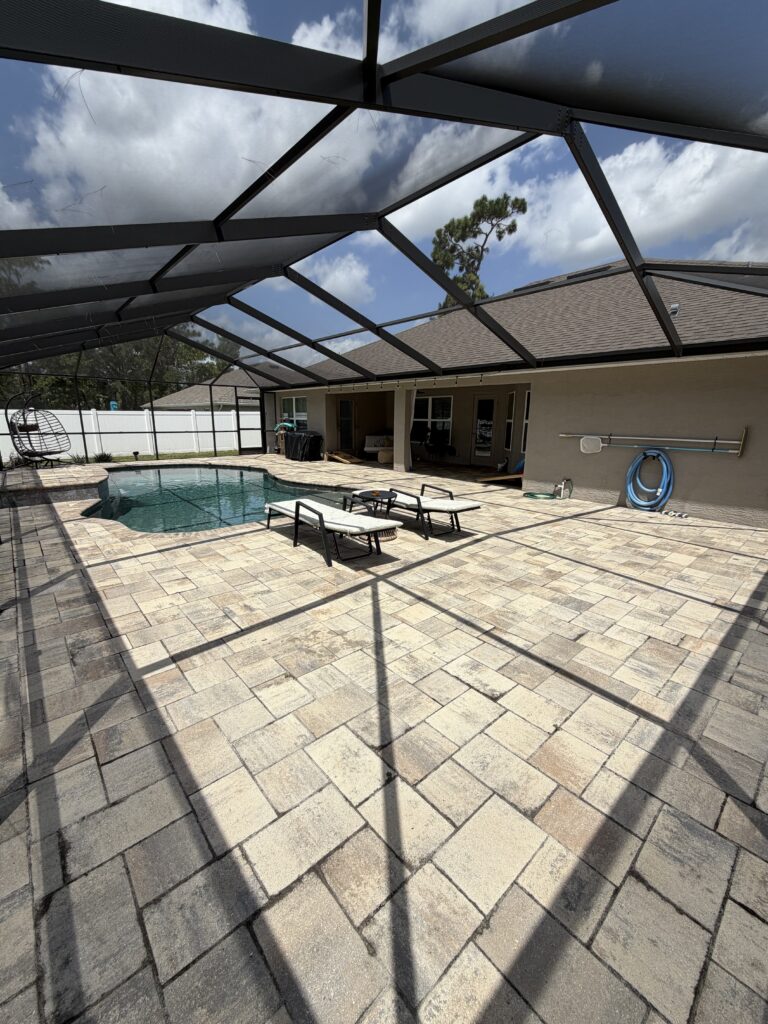
Pool deck pavers need a different level of attention than a standard front walkway. The surface is exposed to more moisture, more foot traffic, more shade patterns, and more frequent cleaning. Around Florida homes, that combination can affect how pavers look before sealing and how well the surface is ready for sealer.
Before sealing pavers around a pool, homeowners should look beyond color alone. The important questions are whether the pavers are clean, whether the joints are stable, whether the surface is dry enough, and whether drainage or irrigation will interfere with the work. Those checks matter for pool decks in Spring Hill, Brooksville, Weeki Wachee, Hernando County, Pasco County, and nearby Tampa Bay areas.
Pool deck pavers stay wetter than other areas
Pool decks often deal with regular splash-out, wet feet, shade from screen enclosures, and nearby landscaping. Even when the surface looks dry from a distance, joints and low areas may still hold moisture. That can make timing more important than it is on some open, sun-exposed driveway areas.
Sealing should not be treated as a race after cleaning. A clean surface still needs the right dry-time window so the sealer is being applied to pavers that are ready for it. This is especially important in humid Florida weather, where afternoon storms and automatic irrigation can change the plan quickly.
Cleaning should remove buildup before sealing
Pool deck pavers can collect soil, mildew, algae, leaf tannins, sunscreen residue, and minerals from water exposure. If those materials remain on the surface, sealer may emphasize uneven areas or trap discoloration that should have been addressed first.
Good prep starts with seeing the pavers clearly. Cleaning helps separate normal color variation from surface buildup, staining, and old coating issues. True Seal Paver Sealing recently covered this related topic in its guide to why brick pavers should be clean and dry before sealing in Florida.
Joint sand should be checked around pool edges
The spaces between pavers matter around a pool deck. Foot traffic, water movement, cleaning, drainage, ants, and weeds can all affect the joints over time. Low or missing joint sand can make the surface look unfinished and may point to areas that need attention before sealing.
Look closely near coping, drains, screen doors, steps, and landscape borders. These are common areas where water and debris collect. If sand is low in those sections, it should be part of the sealing conversation rather than an afterthought.
Drainage can affect the finished result
Pool decks are built to move water, but that does not mean every area drains evenly. Low spots, shaded corners, clogged drains, and landscape runoff can keep some pavers damp longer than others. If those areas are sealed too soon, the surface may not dry or cure uniformly.
Before sealing, homeowners should notice where water sits after rain, rinsing, or pool use. If a section always dries last, that area deserves extra attention during scheduling and prep.
Old sealer should be evaluated before adding another coat
If the pool deck has been sealed before, check for whitening, cloudiness, peeling, uneven shine, slippery-looking buildup, or dark patches that do not match nearby pavers. These signs can mean the old coating needs review before another coat is applied.
Adding new sealer over a failing surface can make a problem more visible. If you see haze or coating failure, review True Seal’s guide on signs your paver sealer has failed before assuming resealing alone is the right answer.
Irrigation and pool equipment should be managed
Automatic sprinklers, hose rinsing, roof runoff, and pool equipment discharge can all create avoidable water exposure before or after sealing. Homeowners should check irrigation schedules and nearby water sources before the project date so the surface has a better chance to stay dry when needed.
If irrigation regularly reaches your pavers, True Seal’s guide on how irrigation overspray affects pavers in Florida explains why that water exposure matters for appearance and maintenance.
When to request a pool deck paver sealing estimate
If your pool deck pavers are faded, holding moisture, growing mildew, losing joint sand, or showing signs of old sealer, it is worth getting the surface evaluated before sealing. A useful estimate should account for the actual condition of the pool deck, not only the square footage.
For help with paver sealing around a pool, patio, walkway, or driveway, request a free estimate from True Seal Paver Sealing. The right plan starts with cleaning, dry-time judgment, joint review, and realistic expectations for Florida conditions.
For more project help, compare True Seal paver sealing, paver stripping, travertine sealing, and concrete sealing.