
August 23, 2026
How Irrigation Overspray Affects Pavers in Florida
Florida sprinklers can affect paver color, joint sand, stains, and sealer performance. Learn what homeowners should watch for and when to request a paver sealing inspection.
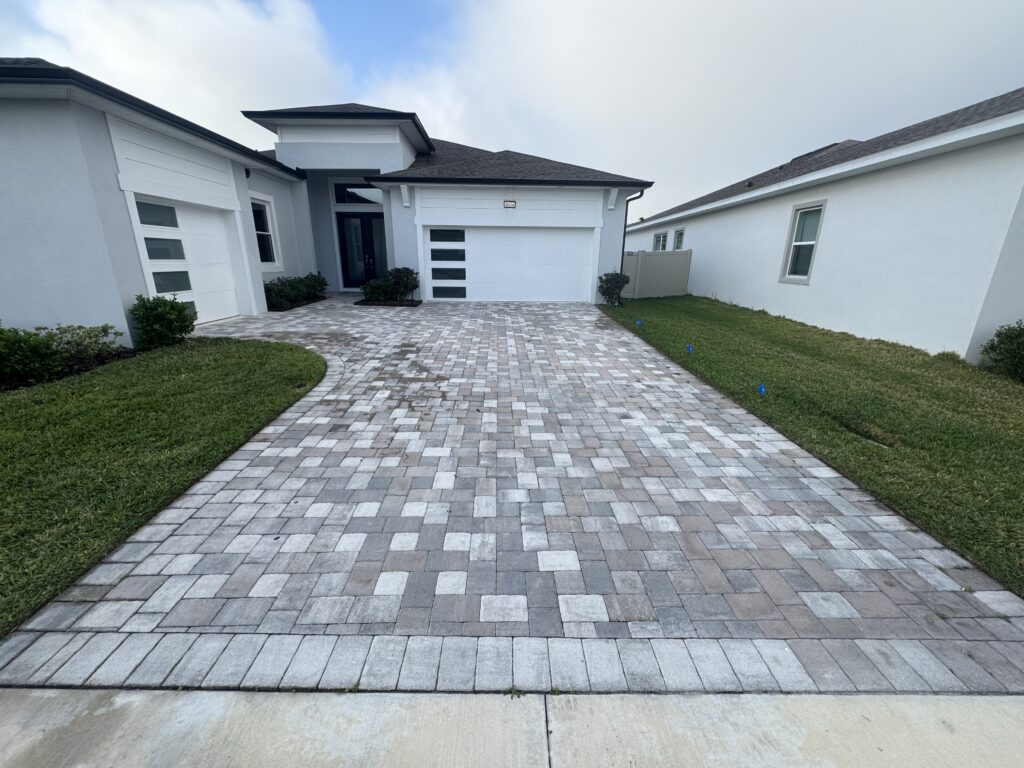
Irrigation is part of everyday property care in Florida, but overspray can be hard on paver driveways, patios, walkways, and pool decks. When sprinklers hit the same paver area day after day, the surface can stay wet longer, collect minerals, encourage mildew, and slowly wear down joint sand.
For homeowners in Spring Hill and the greater Tampa Bay area, irrigation overspray is worth paying attention to because it can make clean pavers look older faster. It can also hide the difference between a surface that simply needs routine cleaning and one that needs cleaning, sanding, sealing, or failed-sealer correction.
Why Sprinkler Water Can Be Hard on Pavers
Sprinkler water is not always the same as rainwater. Depending on the property and water source, irrigation may leave minerals behind, keep shaded areas damp, or repeatedly push water across the same joints.
Mineral Buildup and Rust-Like Staining
Some irrigation systems leave orange, brown, or chalky mineral deposits on outdoor surfaces. The exact stain type depends on the water and surrounding conditions, so the right fix should start with inspection rather than guesswork.
Mildew and Dark Growth in Damp Areas
Overspray can keep pavers damp even when the rest of the surface dries out. Damp edges, shaded corners, and areas near landscaping may develop dark buildup faster than open areas with better sun and airflow.
Joint Sand Movement
When sprinklers repeatedly hit the same joints, they can contribute to sand loss over time. Open joints make the surface look less finished and can create easier paths for weeds, ants, and water movement.
Does Sealing Stop Irrigation Stains?
Sealer can help protect a properly prepared surface, but it is not a guarantee against every stain or every irrigation issue. If sprinklers constantly spray the same area, the surface may still need maintenance and the irrigation pattern may need adjustment.
The important point is that sealing should happen after the pavers are cleaned and evaluated. Sealing over mineral buildup, mildew, trapped moisture, or failed coating can lock in problems instead of solving them.
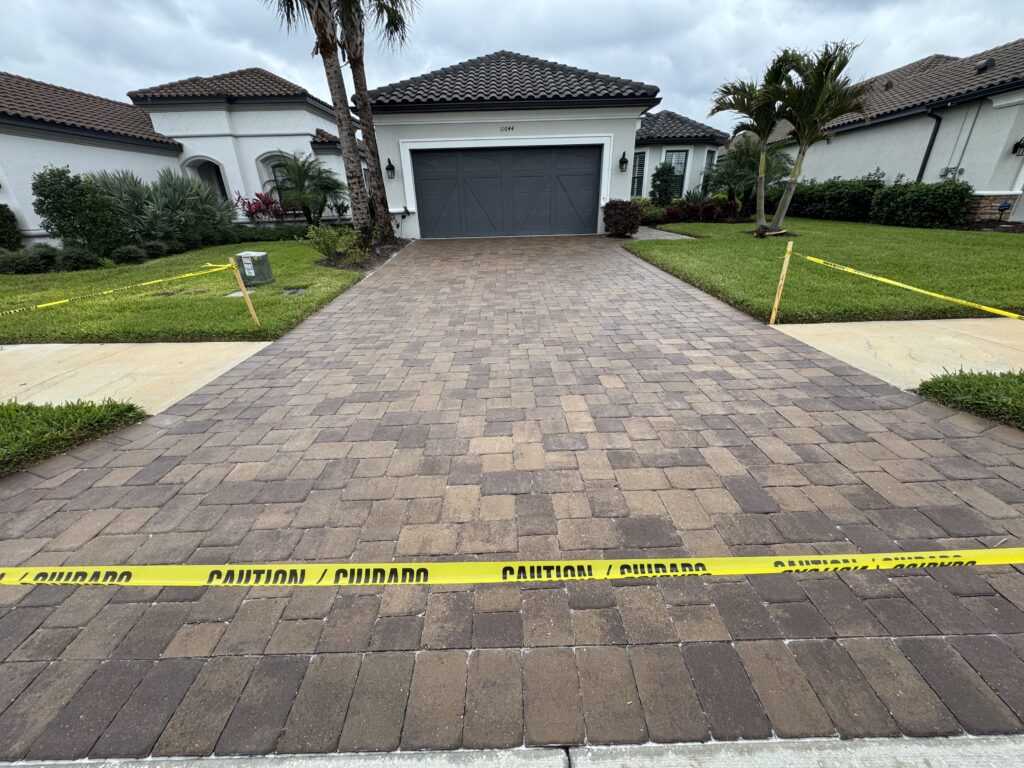
Signs Irrigation May Be Affecting Your Pavers
You may want to have the surface checked if you notice:
- Orange, brown, white, or chalky marks near sprinkler zones
- Dark mildew growth along edges or shaded areas
- Joint sand washing out where sprinklers hit
- Uneven color between wet and dry sections
- Water pooling or running across the same paver joints
- A sealer finish that looks dull, blotchy, or inconsistent near irrigation spray
What Homeowners Can Do First
Start by watching the sprinkler pattern. If the system sprays directly across the pavers, redirecting heads or adjusting runtime may reduce recurring moisture and mineral exposure. Avoid harsh chemical guessing on stains, especially if the surface has old sealer or sensitive stone nearby.
For larger areas, older coatings, or repeated staining, a professional inspection is the safer path. The surface may need cleaning, sanding, sealing, stain treatment, or a different preparation step depending on what is actually happening.
True Seal Paver Sealing Can Help Evaluate the Surface
True Seal Paver Sealing works with homeowners on paver sealing, paver stripping, travertine sealing, concrete sealing, and related surface preparation in Spring Hill and the greater Tampa Bay area.
If irrigation overspray is leaving marks or wearing down your paver joints, the next step is to identify the cause and choose the right process before applying sealer.
Request a free quote online or call (352) 777-8837 to discuss your paver sealing project.
For more project help, compare True Seal paver sealing, paver stripping, travertine sealing, and concrete sealing.