
September 4, 2026
Why Brick Pavers Should Be Clean and Dry Before Sealing in Florida
Brick paver sealing works best when the surface is properly cleaned and allowed to dry. Learn what Florida homeowners should check before sealing driveways, patios, and walkways.
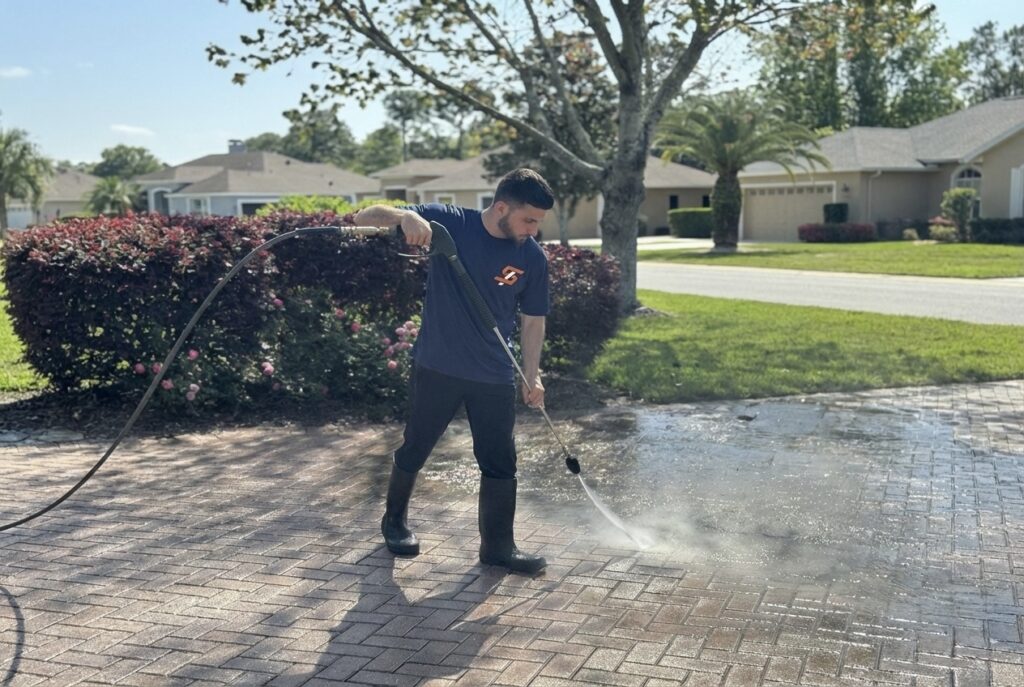
Brick paver sealing is not just a final coat placed over the surface. The result depends heavily on what happens before the sealer is applied. If pavers are still dirty, damp, stained, or holding loose sand and organic buildup, the finished appearance may not match what the homeowner expected.
In Florida, preparation matters even more because driveways, patios, walkways, and pool areas deal with humidity, rain, irrigation overspray, shade, and constant organic debris from landscaping. Homeowners in Spring Hill, Brooksville, Weeki Wachee, Hernando County, and nearby Tampa Bay areas should understand why clean and dry pavers are such an important part of a good sealing plan.
Cleaning removes more than surface dirt
Pavers can look generally clean from the street while still holding mildew, algae, leaf tannins, sand dust, irrigation minerals, tire residue, and soil in the texture of the surface. If that buildup remains, sealer may lock in discoloration or make uneven areas more visible once the surface dries.
Proper cleaning helps reveal the true condition of the pavers. It shows whether the surface is simply dirty, whether there are deeper stains, whether old sealer is still present, and whether the joints need attention before sealing. That inspection step is what separates a rushed coating from a more realistic sealing plan.
Dry time is part of the job
After cleaning, pavers need time to dry. The exact timing depends on weather, shade, airflow, moisture in the joints, and how much water the surface absorbed during cleaning. In Florida, afternoon storms and humidity can slow that process, especially around shaded side yards, pool cages, landscaping, and low areas where water sits longer.
Sealing too soon can create avoidable problems. Damp joints or wet surface areas can affect how evenly the sealer lays down and how the finish appears after it cures. A clean surface is important, but a clean and dry surface is the better target.
Joint sand should be reviewed before sealing
The spaces between pavers matter. If joint sand is low, washed out, or uneven, the finished surface can look less complete even if the top of each paver is clean. Rain, drainage patterns, pressure from tires, and normal use can move joint sand over time.
Before sealing, homeowners should look for loose edges, ant activity, weeds, sand collecting near drains, and areas where the joints sit noticeably below the paver surface. True Seal Paver Sealing has a related guide on why joint sand washes out after Florida rain if you are seeing that issue around your driveway or patio.
Old sealer can hide under dirt
Cleaning can also expose old sealer problems that were hard to see at first. Cloudy patches, whitening, peeling, sticky areas, or uneven sheen can point to coating failure. If those signs are present, another coat of sealer may not be the right first step.
Homeowners should be cautious when a surface has been sealed before and now looks blotchy, hazy, or uneven. True Seal explains this in more detail in its guide to signs your paver sealer has failed.
Irrigation and roof runoff can undo good prep
Sprinklers, roof runoff, and drainage patterns should be checked before sealing day. If irrigation hits freshly cleaned pavers before they dry, or if water crosses the surface too soon after sealing, the project can become harder to control. This is especially relevant for Florida homes where irrigation schedules often run automatically.
If sprinklers regularly leave marks on your pavers, read True Seal’s guide on how irrigation overspray affects pavers in Florida. The same habit of checking water exposure applies before cleaning and sealing.
What homeowners should ask before sealing
Before sealing brick pavers, ask whether the surface has been cleaned enough to evaluate, whether it is dry enough to seal, whether the joint sand needs attention, and whether old coating is present. These questions help set realistic expectations and reduce the chance of surprise issues after the work is complete.
If your driveway, patio, walkway, or pool-area pavers need cleaning and sealing, request a free estimate from True Seal Paver Sealing. A better result starts with preparing the actual surface in front of you, not guessing from a generic paver sealing checklist.
For more project help, compare True Seal paver sealing, paver stripping, travertine sealing, and concrete sealing.