
September 10, 2026
Driveway Extension Paver Sealing: Why Edges Need Extra Attention in Florida
Driveway extensions and edge pavers can wear differently than the main driveway. Learn what Florida homeowners should check before cleaning, sanding, and sealing these areas.
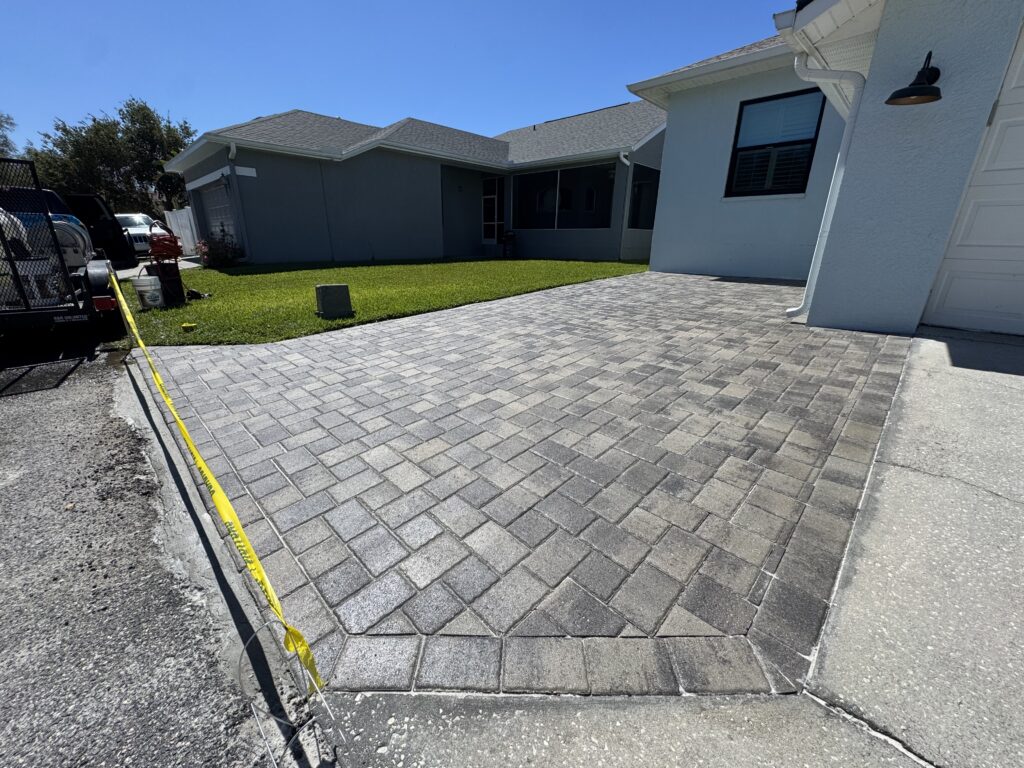
Driveway extensions often look like a simple add-on to the main driveway, but they can age differently. The edge may handle turning tires, runoff, irrigation overspray, weeds, and soil movement from nearby landscaping. If those details are missed before sealing, the finished surface may not look as clean or consistent as the homeowner expected.
For Florida homes in Spring Hill, Brooksville, Weeki Wachee, Hernando County, Pasco County, and nearby Tampa Bay communities, driveway edges and extensions deserve a close look before paver sealing. The goal is not only to improve appearance. The goal is to prepare the actual surface so cleaning, joint sanding, and sealing make sense for the condition of the pavers.
Why driveway extensions wear differently
A driveway extension may not receive the same use as the main driveway. Some sections hold parked vehicles. Others handle tight turns, trailer tires, trash cans, lawn equipment, or foot traffic near a side gate. Those use patterns can affect joint sand, edge stability, stains, and color wear.
Because of that, the extension should be evaluated as its own area. A homeowner may notice that one side looks darker, more faded, looser, or dirtier than the rest of the driveway. That difference is useful information before sealing begins.
Edges collect soil and organic buildup
The outer edge of a paver driveway is often close to grass, mulch, plants, or bare soil. Rain and irrigation can move debris onto the pavers. Over time, that edge can collect mildew, algae, leaf marks, and dirt that may not be obvious until the surface is cleaned.
If that buildup is sealed over, it can affect the finished appearance. Cleaning helps show whether the edge is simply dirty, whether the pavers are stained, or whether a drainage issue is repeatedly pushing soil back onto the surface.
Joint sand loss often starts near borders
Driveway edges and extensions are common places to find low or missing joint sand. Water, ants, weeds, tire pressure, and loose borders can all contribute. If the joints are low before sealing, the surface may still look unfinished even after the pavers are cleaned.
Homeowners should check for weeds, sand collecting at the bottom of a slope, loose edge restraints, or gaps that are wider along the border than in the center of the driveway. True Seal Paver Sealing has a related guide on why joint sand washes out after Florida rain.
Irrigation can hit extensions first
Driveway extensions near lawn areas often sit directly in the path of sprinkler heads. Regular overspray can leave minerals, keep the surface damp, and move soil across the pavers. That can change both the prep work and the timing before sealing.
Before sealing, homeowners should know whether irrigation reaches the extension or border. If sprinklers regularly hit the pavers, review True Seal’s guide on how irrigation overspray affects pavers in Florida.
Old sealer may look worse near turning areas
If the driveway has been sealed before, turning areas and parked-vehicle areas may show wear differently. Look for cloudy patches, uneven sheen, whitening, peeling, or darker areas that do not match nearby pavers. Those signs should be discussed before adding another coat.
Adding new sealer over a failing coating can make problems more visible. If the driveway already looks hazy or blotchy, read True Seal’s guide on signs your paver sealer has failed before assuming a standard reseal is enough.
Dry time matters near shaded edges
Edges near walls, fences, landscaping, and side yards may dry slower than the open driveway. In Florida humidity, that difference matters. A paver surface can look ready in the center while border areas still hold moisture in the joints.
Good scheduling should account for the entire driveway, including extensions and edges. The surface should be cleaned, evaluated, and allowed to dry in a way that fits the actual conditions on site.
What to ask before sealing a driveway extension
Before sealing, ask whether the driveway extension has low joint sand, whether the borders are stable, whether irrigation reaches the pavers, whether old sealer is present, and whether shaded edge areas dry at the same rate as the main driveway. These details help create a more realistic sealing plan.
If your driveway extension, border, or main driveway needs cleaning and sealing, request a free estimate from True Seal Paver Sealing. A better result starts with evaluating the specific paver areas that see the most wear, water, and movement.
For more project help, compare True Seal paver sealing, paver stripping, travertine sealing, and concrete sealing.