
September 1, 2026
Travertine Sealing in Florida: What Homeowners Should Know Before Sealing Natural Stone
Travertine needs a different sealing plan than standard driveway pavers. Learn what Florida homeowners should check before sealing natural stone around walkways, patios, and pool areas.
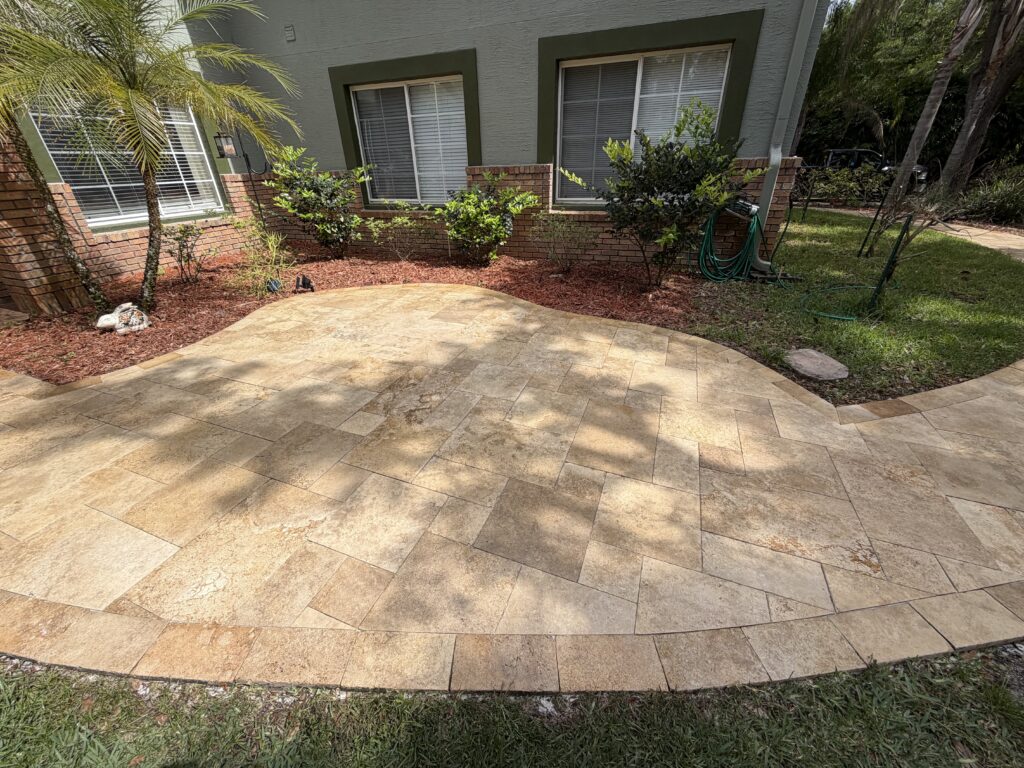
Travertine is not the same surface as a standard brick paver driveway. It is natural stone, and that means the way it absorbs moisture, shows wear, holds soil, and responds to sealer can be different. For Florida homeowners, especially around Spring Hill, Brooksville, Weeki Wachee, and nearby Tampa Bay communities, that difference matters before any sealing work begins.
A good travertine sealing plan starts with the surface condition, not just the product. The stone should be evaluated for dirt, moisture, old coating, joint condition, shade, drainage, irrigation overspray, and the way the area is used day to day. Rushing that step can lead to uneven appearance or sealing expectations that do not match the actual condition of the stone.
Why travertine needs its own sealing plan
Travertine is a natural stone with texture, pores, pits, and color variation. That natural variation is part of the look, but it also means the surface can react differently from one section to another. A shaded walkway, a sunny patio edge, and a damp area near landscaping may not absorb or dry the same way.
That is why the first question should not be, “Can this be sealed?” The better question is, “What is the condition of this stone, and what needs to be corrected before sealing?” That keeps the conversation focused on preparation, timing, and realistic expectations.
Cleaning has to be appropriate for the stone
Travertine can collect dirt, mildew, leaf marks, sunscreen residue, irrigation minerals, and other buildup common around Florida homes. Cleaning should remove surface contamination without treating the stone like a rough concrete slab. The goal is to prepare the surface while respecting the material.
Once the stone is clean, it is easier to see what is staining, what is normal color variation, and what may be moisture-related. That matters because sealer can improve protection and appearance, but it should not be used to hide unresolved surface problems.
Moisture and shade change the timing
Florida humidity can slow dry time, and travertine areas near pools, landscaping, roof runoff, or shaded side yards may hold moisture longer than expected. Sealing before the surface is ready can affect the finished look. It can also make it harder to tell whether a mark is part of the stone, trapped moisture, or leftover contamination.
Homeowners should also check irrigation schedules before sealing. Sprinklers hitting a walkway or patio too soon after cleaning or sealing can create avoidable problems. This is the same reason irrigation overspray matters on pavers, which True Seal covers in more detail in its guide to how irrigation overspray affects pavers in Florida.
Old coating should be checked before resealing
If travertine has been sealed before, the existing coating should be evaluated. Look for cloudy areas, peeling, uneven sheen, sticky spots, white haze, or darker patches that do not match the rest of the stone. Those signs can change the scope from simple cleaning and sealing to a more careful correction discussion.
Adding sealer over a surface that already has a failed coating may not solve the issue. The same principle applies to brick pavers. If you are seeing cloudy or failing sealer, review True Seal’s guide on signs your paver sealer has failed before assuming another coat is the answer.
Walkways, patios, and pool areas wear differently
A travertine walkway near landscaping may deal with soil and irrigation minerals. A patio may collect leaf staining and furniture marks. A pool area may see more water exposure, sunscreen, and foot traffic. Each area can need a slightly different prep conversation even when the stone looks similar from a distance.
That is why a useful estimate should look at more than square footage. It should consider drainage, shade, nearby plants, surface wear, joint condition, previous sealer, and how often the area gets wet. These details help homeowners understand what sealing can reasonably do and what needs attention first.
What to ask before sealing travertine
Before scheduling travertine sealing, ask whether the stone is clean enough to evaluate, whether old sealer is present, whether the area dries evenly, and whether irrigation or drainage will affect timing. Also ask what the surface should look like after sealing based on its current condition, not based on a generic photo.
If you have travertine around a walkway, patio, entry, or pool area and want a clear plan before sealing, request a free estimate from True Seal Paver Sealing. The right approach starts with evaluating the actual stone and preparing it correctly for Florida conditions.
For more project help, compare True Seal paver sealing, paver stripping, travertine sealing, and concrete sealing.