
August 26, 2026
Paver Sealing in Weeki Wachee: What Homeowners Should Check Before Resealing
Weeki Wachee homeowners should check joint sand, drainage, irrigation overspray, and old sealer condition before resealing pavers. Here is what to review first.
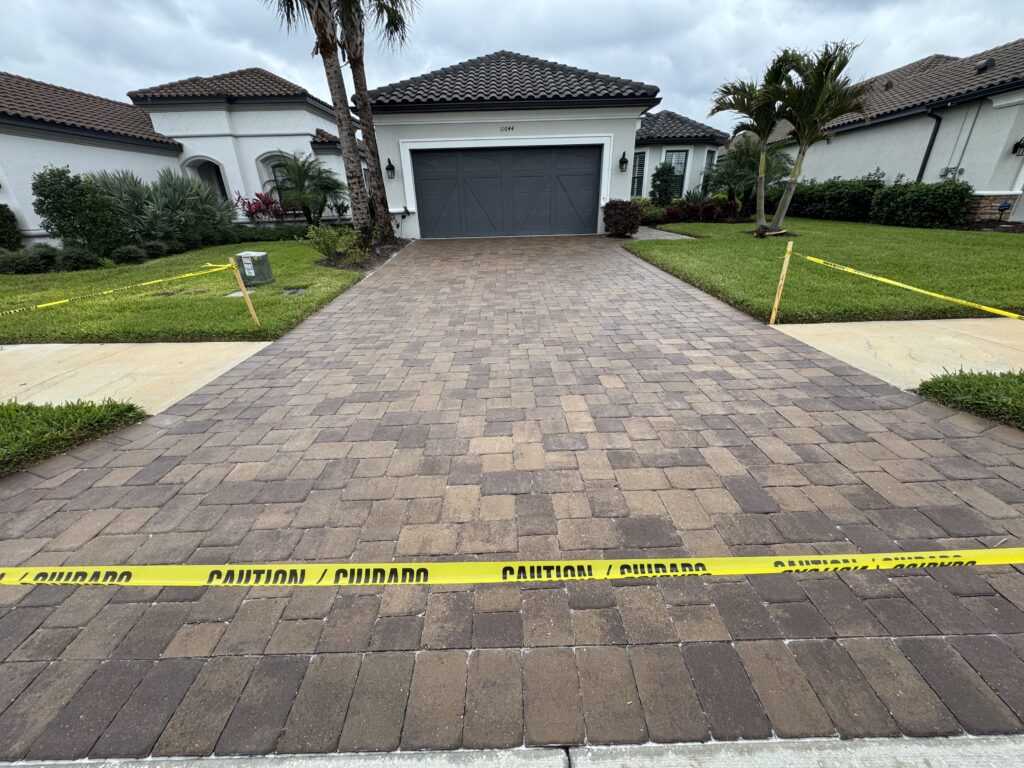
Weeki Wachee homeowners deal with the same Florida conditions that wear down pavers across Hernando County: heavy rain, humidity, sprinkler overspray, heat, weeds, sand loss, and occasional standing water. Before a driveway, patio, pool deck, or walkway is resealed, the surface should be checked carefully so new sealer is not applied over problems that still need correction.
This guide explains what to look for before scheduling paver sealing in Weeki Wachee, how to tell when cleaning or joint sand attention may be needed first, and when failed old sealer should be evaluated before any new coating is applied.
Why Weeki Wachee Pavers Need a Careful Pre-Seal Check
Paver sealing is not just a topcoat. The result depends heavily on preparation. If the pavers are dirty, damp, loose, stained, or already coated with failing sealer, the new application may not perform the way the homeowner expects. That is especially important in Florida, where rain and humidity can expose weak preparation quickly.
In Weeki Wachee and nearby Hernando County communities, outdoor surfaces often sit under tree cover, near irrigation, or beside pool areas. Those conditions can create algae growth, mineral marks, fading, joint erosion, and uneven appearance. A good sealing plan starts by identifying those issues before product is applied.
Check the Joint Sand First
Joint sand helps support the paver system and reduce movement between the units. If the joints are low, washed out, or uneven, sealing without reviewing the sand can leave the surface looking unfinished. Homeowners should look for open joints, loose sand along edges, weed growth, ant activity, and areas where rain runoff has carried sand away.
Not every surface needs the same sanding work, so the best next step is a site-specific review. True Seal Paver Sealing can evaluate whether the pavers need cleaning, sand touch-up, or other preparation before sealing.
Look for Old Sealer Problems
Old sealer can change the scope of a paver sealing job. White haze, cloudy patches, peeling, trapped moisture, sticky areas, or blotchy shine may mean the existing coating has failed. Applying new sealer over a failed coating can lock in the problem instead of solving it.
If those symptoms are visible, the surface may need failed-sealer correction or paver stripping before resealing is considered. Homeowners can learn more on True Seal’s guide to signs paver sealer has failed.
Watch How Water Moves Across the Surface
Drainage matters before sealing. After a storm or sprinkler cycle, check whether water drains away or sits in low areas. Standing water can contribute to staining, algae growth, joint sand movement, and uneven drying. Pool decks, shaded patios, and driveway edges deserve extra attention because they often stay damp longer than open areas.
Sealer is not a drainage repair. If water consistently collects in one area, that should be discussed before the project begins so expectations are clear.
Check Irrigation Overspray and Rust-Prone Areas
Sprinkler overspray can leave mineral deposits, rust-colored marks, and repeated moisture exposure on pavers. In Florida, irrigation can affect both appearance and long-term maintenance. Homeowners should look at the sides of driveways, walkways near landscaping, and any pavers close to sprinkler heads.
Before sealing, it may make sense to adjust irrigation patterns so treated pavers are not being hit constantly. For more detail, see True Seal’s article on how irrigation overspray affects pavers in Florida.
Do Not Rush the Surface Prep
A rushed reseal can miss the issues that matter most: embedded dirt, uneven color, old coating failure, damp joints, and weak sand. Proper preparation may include cleaning, stain review, joint sand attention, and a realistic conversation about the existing surface condition.
For homeowners comparing options, the goal should not be simply making pavers shiny. The goal is to prepare the surface correctly and choose a sealing approach that fits the material, current condition, and Florida exposure.
When to Request a Weeki Wachee Paver Sealing Estimate
It is a good time to request an estimate if the pavers look faded, the joints are losing sand, weeds are appearing, water no longer beads like it used to, or the previous sealer looks cloudy or uneven. True Seal Paver Sealing has a dedicated paver sealing page for Weeki Wachee, FL and offers quote requests through the website.
If you are in Weeki Wachee or a nearby service area and want your driveway, patio, pool deck, or walkway reviewed, request a free estimate from True Seal Paver Sealing. A surface review helps determine whether cleaning, sanding, sealing, or failed-sealer correction should come first.
For more project help, compare True Seal paver sealing, paver stripping, travertine sealing, and concrete sealing.