
September 28, 2026
Why Weeds Grow Between Pavers in Weeki Wachee
Learn why weeds and organic growth return between Florida pavers, how joints and moisture contribute, and what cleaning, sanding, and sealing can realistically do.
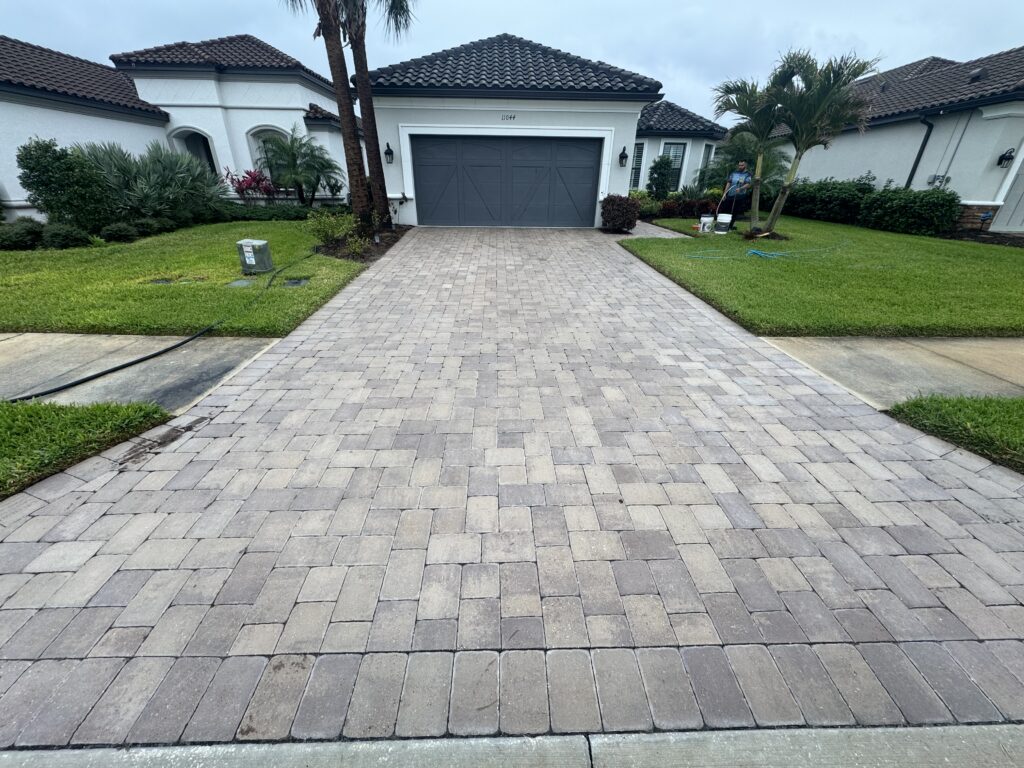
Weeds between pavers are frustrating because they can return after pulling, spraying, or pressure washing. The common assumption is that roots are simply growing up from deep beneath the driveway, but growth can also begin when seeds, soil, and organic material collect in the joints from above.
For Weeki Wachee homeowners, Florida rain, humidity, irrigation, and fast-growing vegetation can keep paver joints damp enough for repeated growth. A lasting maintenance plan starts by understanding the joints, drainage, and surface condition instead of treating every green spot as the same problem.
Why weeds grow in paver joints
Paver joints naturally collect fine soil, leaf fragments, grass clippings, pollen, and other debris. Seeds can settle into that material and germinate when moisture is available. Even a small amount of organic buildup can support growth.
Some plants may also spread from nearby lawn edges or landscaping. The cause can vary across the same driveway, with windblown growth near open areas and spreading roots near borders.
Low or missing joint sand creates more space
When joint sand washes out or is removed during aggressive cleaning, the open joints can hold more soil and moisture. Low joints also make it easier for debris to remain below the paver surface where routine sweeping may not remove it.
Adding new sand without cleaning the joint first can bury organic material and unstable residue. The joints should be evaluated after cleaning so the replacement material is installed into a properly prepared space.
Why pulling weeds may not solve the joint problem
Pulling visible growth removes the plant but may leave roots, seeds, and organic material behind. It also does not refill a low joint or correct water that repeatedly reaches the area.
Manual removal can still be useful as part of maintenance, but repeated growth in the same location is a reason to inspect the joint depth, nearby landscaping, irrigation, and drainage.
Why pressure washing can create a cycle
Pressure washing may remove weeds and surface dirt, but excessive force can also displace joint sand. If the joints are left low after cleaning, they can collect new soil and seeds, creating conditions for another round of growth.
The cleaning process should remove contamination while protecting the pavers and preparing the joints for the next step. More pressure is not automatically a more complete solution.
Moisture keeps the joints active
Sprinkler overspray, roof runoff, pool splash, low spots, and shaded borders can keep joints damp. Growth often returns fastest where the pavers dry slowly or receive water on a predictable schedule.
Watch the area after rain or irrigation. Note which joints stay dark longest and whether water travels from landscaping across the pavers. Sealing does not correct grading or stop an outside water source.
Shade and organic debris work together
Shaded pavers beneath trees, fences, roof lines, or dense plants often dry more slowly. Leaves, mulch, flower petals, and grass clippings may also collect in those protected areas.
Regular debris removal can reduce the material available for new growth. Trimming back vegetation when practical and adjusting sprinkler coverage can support the cleaning and joint-sanding work.
Does sealing stop weeds permanently?
Sealing should not be presented as a permanent guarantee against every weed. A properly prepared system can help stabilize suitable joint sand and make routine maintenance more manageable, but seeds and debris can still arrive from above.
Movement, drainage, traffic, erosion, landscape growth, and future cleaning can change the joints over time. Homeowners should expect ongoing inspection and maintenance rather than assuming the surface will never need attention again.
Joint sand is part of the system
The type and condition of the joint material matter. Sand should fill the joint appropriately without being placed over weeds, mud, loose residue, or standing water.
The pavers and joints also need suitable drying conditions before sealing. Florida humidity and shaded sections can extend that timing even when the top of the driveway appears dry.
Existing sealer may change the preparation
If the pavers were sealed before, the old coating should be inspected for cloudiness, peeling, buildup, or uneven wear. Cleaning weeds and joints does not automatically correct a failing sealer on the paver faces.
A new coat should not be applied over unstable material or contamination. The surface and joints need to be considered together so one part of the project does not undermine the other.
Be cautious with weed killers before sealing
Homeowners sometimes apply a weed-control product immediately before professional cleaning. Residue may remain in the joints or on the paver surface, and some products can affect nearby plants or complicate preparation.
Tell the contractor what was applied and when. Do not mix products or add a last-minute chemical treatment unless it is part of the agreed preparation plan.
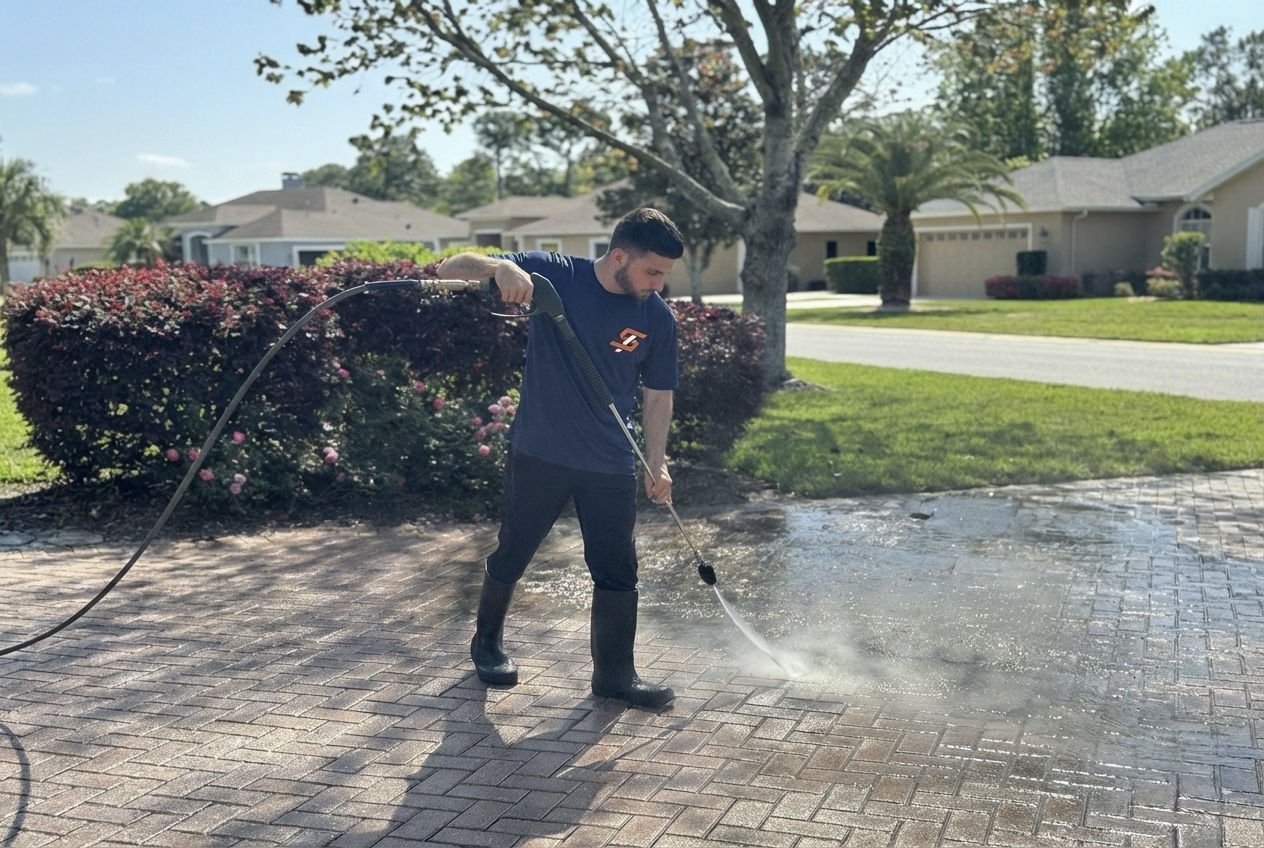
What a professional joint-preparation sequence may consider
- Removing weeds, roots, loose debris, and contaminated joint material.
- Cleaning the paver faces without unnecessarily damaging edges or joints.
- Inspecting low spots, drainage paths, irrigation, and shaded areas.
- Allowing the pavers and joints to dry appropriately.
- Refilling suitable joints with the planned sand system.
- Removing excess material from the paver faces.
- Applying a compatible sealer only when the surface is ready.
How homeowners can reduce future growth
Sweep or blow debris away before it breaks down in the joints. Keep mulch and soil from washing onto the pavers. Review sprinklers that repeatedly wet one edge, and address low areas where water and debris collect.
Pay attention to lawn borders, where grass or groundcover may spread into the paver field. Routine maintenance near the edges can prevent a small area from becoming a larger joint-cleaning project.
When recurring weeds point to a larger issue
If growth returns rapidly after cleaning, the joints may be low, drainage may be feeding the area, or nearby landscaping may be spreading into the pavers. Movement or settlement can also create wider gaps that collect more material.
An inspection should include the whole surface, not only the visible weeds. Treating the cause gives homeowners a more realistic plan than repeatedly removing the top growth.
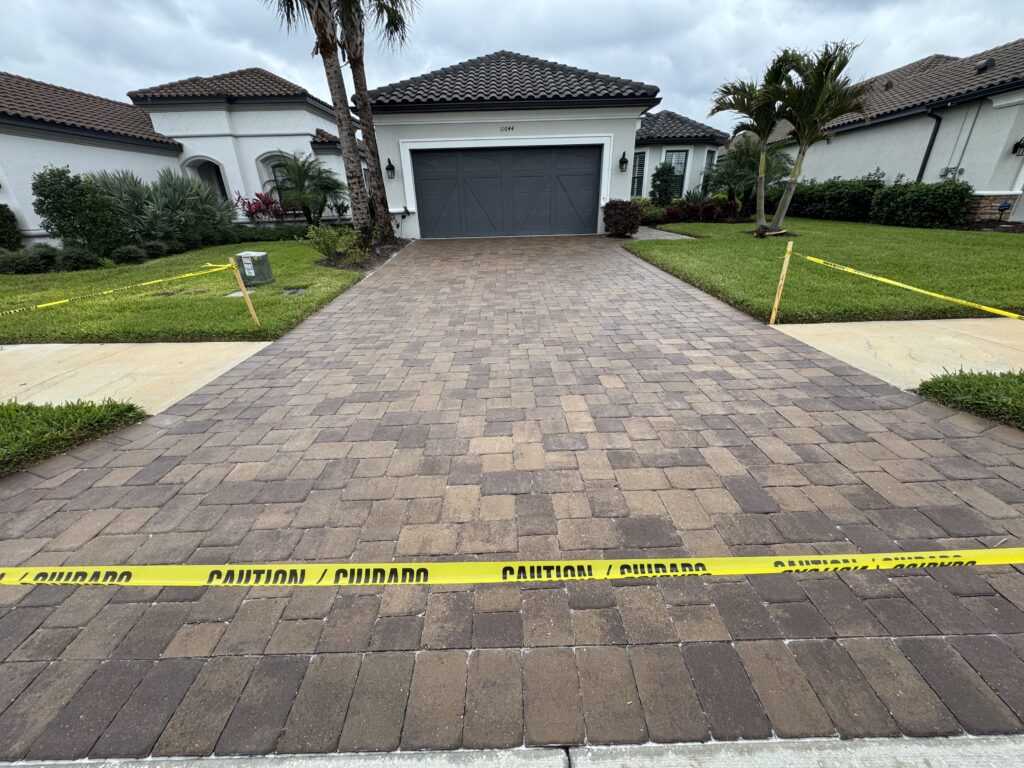
Need help with weeds and paver joints in Weeki Wachee?
True Seal Paver Sealing can inspect the pavers, joint condition, drainage, existing coating, and recurring growth before recommending cleaning, sanding, or sealing. For guidance based on your driveway, patio, walkway, or pool deck, request a free estimate from True Seal Paver Sealing.
For more project help, compare True Seal paver sealing, paver stripping, travertine sealing, and concrete sealing.