
August 31, 2026
Why Faded Pavers Can Look Blotchy After Sealing If Prep Is Rushed
Faded pavers do not always seal evenly. Learn why cleaning, joint sand review, old sealer checks, and dry Florida conditions matter before resealing.
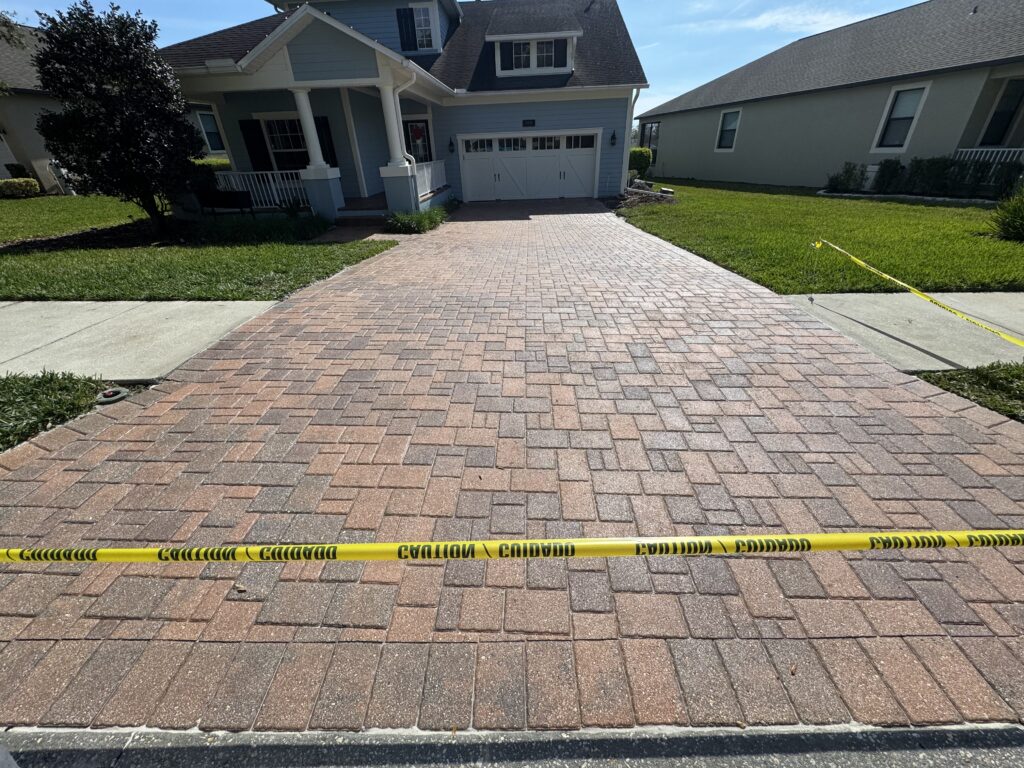
When pavers start looking faded, it is easy to think sealer alone will bring everything back evenly. Sometimes it can make a driveway, walkway, or patio look much richer. But if the surface is dirty, unevenly worn, damp, or holding old coating, sealing too quickly can make color differences stand out instead of hiding them.
That is why good prep matters so much for Florida paver sealing. Sun, rain, irrigation overspray, humidity, weeds, and daily traffic all affect the surface before any sealer touches it. For homeowners around Spring Hill and the surrounding Tampa Bay area, the best result usually starts with a careful look at what the pavers are actually telling you.
Why faded pavers do not always seal evenly
Pavers fade for different reasons. Some lose color from UV exposure. Some hold mineral staining from irrigation. Others have dark patches from moisture, organic growth, tire marks, or areas where old sealer is still present. If those conditions are not handled before sealing, the finish may highlight the difference between clean and contaminated areas.
This is especially common on driveways where the tire path, shaded edge, and open sun-exposed sections all age differently. A driveway may look like one surface from the street, but up close it can have several different conditions across the same field of pavers.
Cleaning reveals the real condition of the surface
Cleaning is not just about making pavers look better for a day. It helps reveal what is permanent fading, what is surface buildup, and what may need extra correction before sealer is applied. Dirt, mildew, leaf tannins, and irrigation residue can all change the way a sealer appears after it dries.
Homeowners sometimes judge paver color while the surface is still dirty or wet. That can be misleading. A clean, dry surface gives a much more honest picture of whether sealing is straightforward or whether old sealer, staining, or uneven absorption needs to be discussed first.
Old sealer can change the whole plan
If a previous sealer is peeling, cloudy, white, sticky, or trapped in low spots, adding another coat may not solve the problem. In some cases, the old coating needs to be evaluated before any resealing plan makes sense. That does not mean every driveway needs stripping, but it does mean failed sealer should not be ignored.
True Seal Paver Sealing has a separate guide on signs your paver sealer has failed if you are trying to decide whether your pavers need normal maintenance or a more corrective approach.
Joint sand affects the finished look too
Joint sand is easy to overlook because it sits between the pavers, but it affects the finished appearance of the whole surface. Low joints, washed-out areas, weeds, ants, and edge movement can all make a sealed surface look less uniform. Before sealing, the joints should be reviewed so the surface is not only cleaned but also ready to be stabilized where appropriate.
Florida rain can move sand faster than homeowners expect, especially on sloped driveways and open patio areas. If you have noticed sand collecting near the bottom of the driveway or along drains, that is worth pointing out during an estimate.
Florida drying conditions matter
Even a well-cleaned surface needs the right conditions before sealing. Afternoon storms, heavy humidity, shaded areas, irrigation schedules, and damp joints can all affect timing. Rushing the dry time can increase the chance of uneven appearance, haze, or other finish issues.
That is one reason scheduling matters for paver sealing in Florida. The goal is not simply to get sealer on the ground. The goal is to apply it when the surface has been prepared properly and the weather window supports a cleaner cure.
What homeowners should check before resealing
Before requesting paver sealing, take a slow look across the surface. Notice whether the color changes from one area to another, whether the joints are low, whether there are white or cloudy spots, and whether irrigation water regularly hits the pavers. These details help separate a simple maintenance sealing job from a surface that may need more prep or correction.
If your pavers are faded and you want a realistic plan before resealing, request a free estimate from True Seal Paver Sealing. A careful inspection can help identify cleaning needs, joint sand concerns, old sealer issues, and timing considerations before the project begins.
For more project help, compare True Seal paver sealing, paver stripping, travertine sealing, and concrete sealing.