
September 19, 2026
Decorative Concrete Sealing in Brooksville: A Homeowner Checklist
Brooksville homeowners can use this practical checklist to evaluate cleaning, moisture, coatings, drainage, traction, and maintenance before sealing decorative concrete.
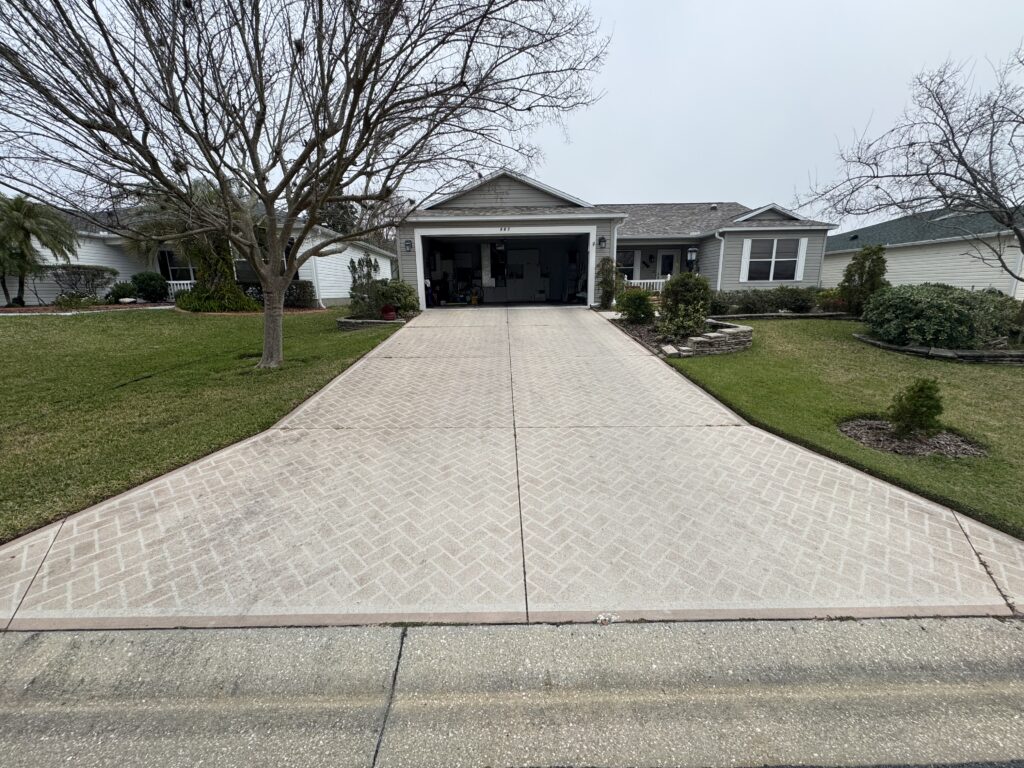
Decorative concrete can give a driveway, walkway, patio, or pool-area surface a finished look, but sealing it is not a one-step decision. The condition of the concrete, any existing coating, drainage, moisture, weather, and the way the area is used all matter before a new sealer is applied.
For homeowners in Brooksville and the surrounding Florida area, heat, humidity, irrigation, and fast-changing rain patterns add another layer to the planning. A careful inspection helps determine whether the surface is ready for routine cleaning and sealing or whether it needs additional preparation first.
Start by identifying the surface
“Decorative concrete” can describe several different finishes. A driveway may be stamped, stained, textured, colored, coated, or patterned to resemble stone or pavers. The preparation that works for one finish may not be appropriate for another.
Before scheduling service, note whether the color appears to be mixed into the concrete, applied as a stain, or covered by a separate coating. If you have records from an earlier installation or sealing, keep them available. Homeowners do not need to diagnose the system themselves, but any product history can help the contractor evaluate compatibility and preparation.
Look for an existing sealer or coating
An older sealer may still be present even when the surface looks dull. Check for differences in sheen, darker patches, peeling areas, cloudy sections, or places where water behaves differently. Uneven appearance can indicate that the previous coating has worn at different rates.
Applying a new product over an unknown or failing layer can create adhesion and appearance problems. When the existing coating is damaged, preparation may involve more than ordinary cleaning. The correct next step depends on what remains on the concrete and how securely it is bonded.
Separate stains from coating failure
Rust, leaf tannins, irrigation deposits, tire marks, mildew, and organic buildup can all change the way concrete looks. These are not automatically signs that the concrete itself is failing. At the same time, whitening, flaking, bubbling, or peeling may point to a coating problem instead of a surface stain.
Show the contractor each problem area before work begins. Different causes may require different cleaning or correction methods, and a single aggressive treatment is not appropriate for every decorative finish.
Check for cracks, movement, and damaged edges
Sealer can help with surface maintenance, but it is not a structural repair. Walk the area and note cracks, loose sections, spalling, broken corners, or movement at control joints. Also check transitions near the garage, sidewalk, street apron, drains, and landscaping borders.
Small cracks and cosmetic imperfections do not always prevent sealing, but they should be evaluated before the surface is cleaned and coated. If repair is needed, the repaired area may look different from the surrounding decorative finish. It is better to discuss that possibility early than to discover it after the rest of the surface has been sealed.
Pay attention to drainage and recurring moisture
Florida properties often have multiple water sources around hard surfaces: roof runoff, downspouts, sprinklers, pool splash, air-conditioner discharge, and low areas that collect rain. Watch where the water travels and how long the decorative concrete stays damp.
Recurring moisture matters because the surface needs appropriate drying conditions before sealer is applied. Ponding water can also leave deposits and contribute to uneven wear after the project. Sealing should not be treated as a fix for grading or drainage problems.
Plan around irrigation and the weather
Before the appointment, review nearby irrigation zones and identify sprinkler heads that reach the concrete. A scheduled cycle can re-wet a freshly cleaned surface or interfere with curing. Be prepared to pause those zones for the time recommended for the project.
Brooksville weather can shift quickly, especially during Florida’s wetter periods. A surface may look dry on top while shaded areas, joints, or low spots still hold moisture. The work schedule should reflect the actual surface conditions and forecast rather than a fixed calendar promise.
Ask about the desired appearance
Homeowners sometimes use the word “sealed” to mean a shiny finish, while others want a more natural look. Those are different expectations. The existing decorative treatment, product compatibility, surface texture, and number of previous coatings can all influence the final appearance.
Discuss the desired look before work starts. Photos can help explain your preference, but they should not be treated as a guarantee that a different slab will look identical. Lighting, texture, porosity, color, and previous treatments vary from property to property.
Consider traction where the surface gets wet
Traction is especially important on sloped driveways, steps, walkways, pool areas, and other locations exposed to rain or irrigation. A decorative surface that becomes wet should be evaluated for how it will be used, not only how it will look.
Tell the contractor about areas where people frequently walk, where vehicles turn, or where water commonly crosses the surface. The appropriate approach depends on the finish and location. Appearance should not be considered separately from normal use and safety.
Make sure cleaning matches the finish
Decorative concrete should be cleaned thoroughly enough to remove dirt and buildup without assuming every stain or coating can be treated the same way. Excessive pressure or an unsuitable chemical can affect some decorative finishes.
A professional evaluation should consider the texture, coloring method, existing sealer, and problem areas before choosing a cleaning process. Homeowners should avoid applying last-minute household cleaners, acids, weed killers, or other chemicals unless specifically directed, because residues may complicate preparation.
Allow time for drying and curing
Cleaning day and sealing day may not always be the same, particularly when weather or moisture conditions require more drying time. After application, the surface may also need to remain free from foot traffic, vehicles, sprinklers, and movable objects for a period specified for that project.
Plan alternate parking and entry routes in advance. Keep pets, deliveries, lawn service, and visitors away from the work zone. Do not judge readiness only by touching the surface or seeing that it no longer looks wet; follow the project-specific instructions provided by the contractor.
Understand what maintenance will still be needed
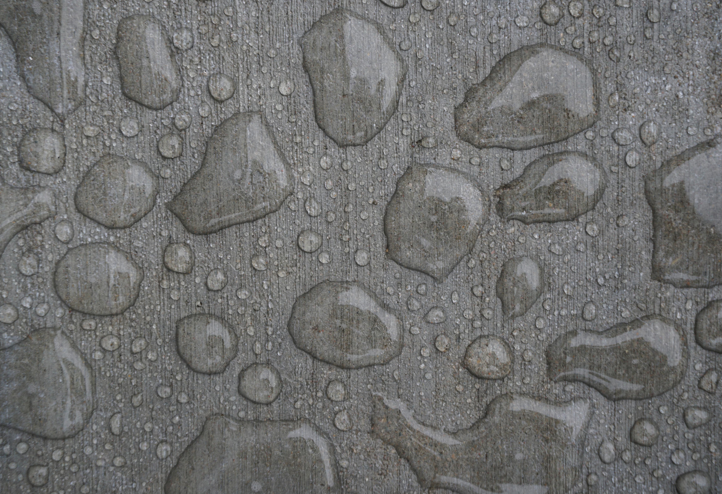
Sealing does not make decorative concrete maintenance-free. Dirt, leaves, irrigation deposits, mildew, and vehicle residue can still collect on the surface. Routine sweeping and appropriate cleaning help prevent buildup from sitting on the finish.
Avoid assuming that every strong cleaner or pressure setting is safe for the sealed surface. Ask what type of maintenance is suitable for the finish and what signs should prompt a professional inspection. Wear is often uneven, with traffic lanes, drainage paths, sunny sections, and shaded areas aging differently.
Decorative concrete sealing checklist
- Identify the decorative finish and any known product history.
- Look for remaining sealer, peeling, whitening, or uneven sheen.
- Point out stains, cracks, damaged edges, and repaired areas.
- Check drainage, low spots, sprinklers, and other moisture sources.
- Discuss the desired appearance and how the area is normally used.
- Consider traction on slopes and frequently wet surfaces.
- Plan for cleaning, drying, curing, alternate parking, and restricted traffic.
- Ask for maintenance guidance that matches the actual finish.
Need a decorative concrete evaluation in the True Seal service area?
True Seal Paver Sealing can inspect the existing surface and explain the preparation considerations for your decorative concrete project. For a recommendation based on your property, request a free estimate from True Seal Paver Sealing.
For more project help, compare True Seal paver sealing, paver stripping, travertine sealing, and concrete sealing.