
September 21, 2026
Can You Seal Over Old Paver Sealer? What Florida Homeowners Should Know
Learn why an existing paver coating should be inspected before resealing, which warning signs matter, and when cleaning alone may not be enough.
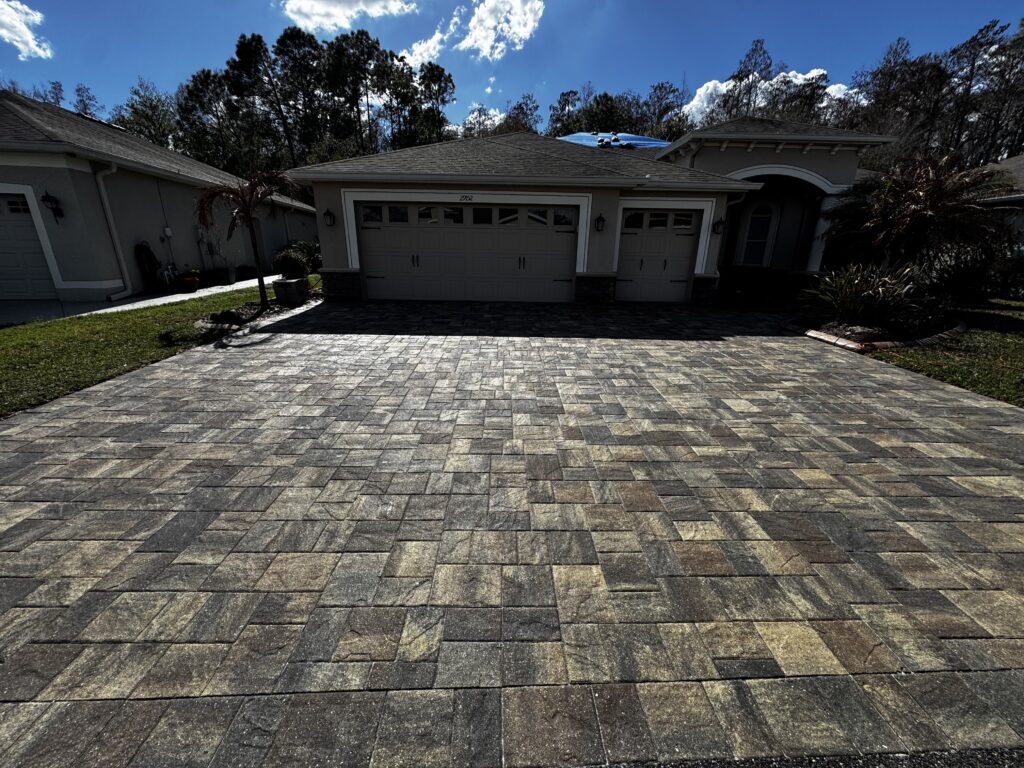
Resealing pavers is not always as simple as cleaning the surface and adding another coat. If an older sealer is still present, the new product must interact with that existing layer, the pavers beneath it, and any moisture or contamination trapped in between.
Florida homeowners often notice fading, uneven shine, whitening, peeling, or areas that seem to absorb water differently. Those symptoms do not all have the same cause. Before new sealer is applied, the old coating and the condition of the pavers should be evaluated so the preparation matches the surface.
Can new sealer go over old sealer?
Sometimes an existing coating may be suitable for a maintenance application, but that should be determined by inspection rather than assumption. The remaining sealer needs to be compatible, securely bonded, clean, and in a condition that can accept the proposed product.
If the old coating is failing, contaminated, excessively built up, or incompatible with the new material, covering it can preserve the underlying problem instead of correcting it. A fresh top layer may temporarily change the appearance while leaving weak or cloudy material underneath.
Why Florida conditions make the inspection important
Heat, humidity, irrigation, heavy rain, and strong sun can expose different sections of the same driveway to very different conditions. Shaded pavers may stay damp longer. Tire paths and turning areas receive more wear. Edges near grass or sprinklers may collect deposits and organic growth.
Because wear is uneven, one section can look ready for routine resealing while another shows signs that the existing coating needs more attention. The whole surface should be evaluated, including borders, low areas, joints, garage transitions, and places where water commonly travels.
Warning signs that should be checked before resealing
Cloudy or white areas
A cloudy appearance can have more than one cause. Moisture, coating failure, residue, wear, or a reaction within the existing system may contribute. Adding another coat without identifying the cause can make correction more difficult.
Peeling, flaking, or lifting
Loose coating is a clear reason to pause. New sealer depends on the layer beneath it. If that layer is separating from the pavers, the new application may be attached to material that is already failing.
Uneven gloss or dark patches
Differences in sheen can show where sealer remains, where it has worn, or where multiple applications have created uneven buildup. Darker areas can also relate to moisture or surface differences, so appearance alone is not enough for a diagnosis.
Sticky or soft sections
A surface that remains tacky, marks easily, or feels soft under normal conditions should be inspected before anything is added. Covering a soft layer does not address why it failed to harden or remain stable.
Visible buildup along edges and joints
Sealer can accumulate differently near borders, repairs, drainage paths, and recessed joints. These areas may respond differently during cleaning and should not be treated as if the entire surface has a uniform coating.
Why pressure washing does not automatically remove old sealer
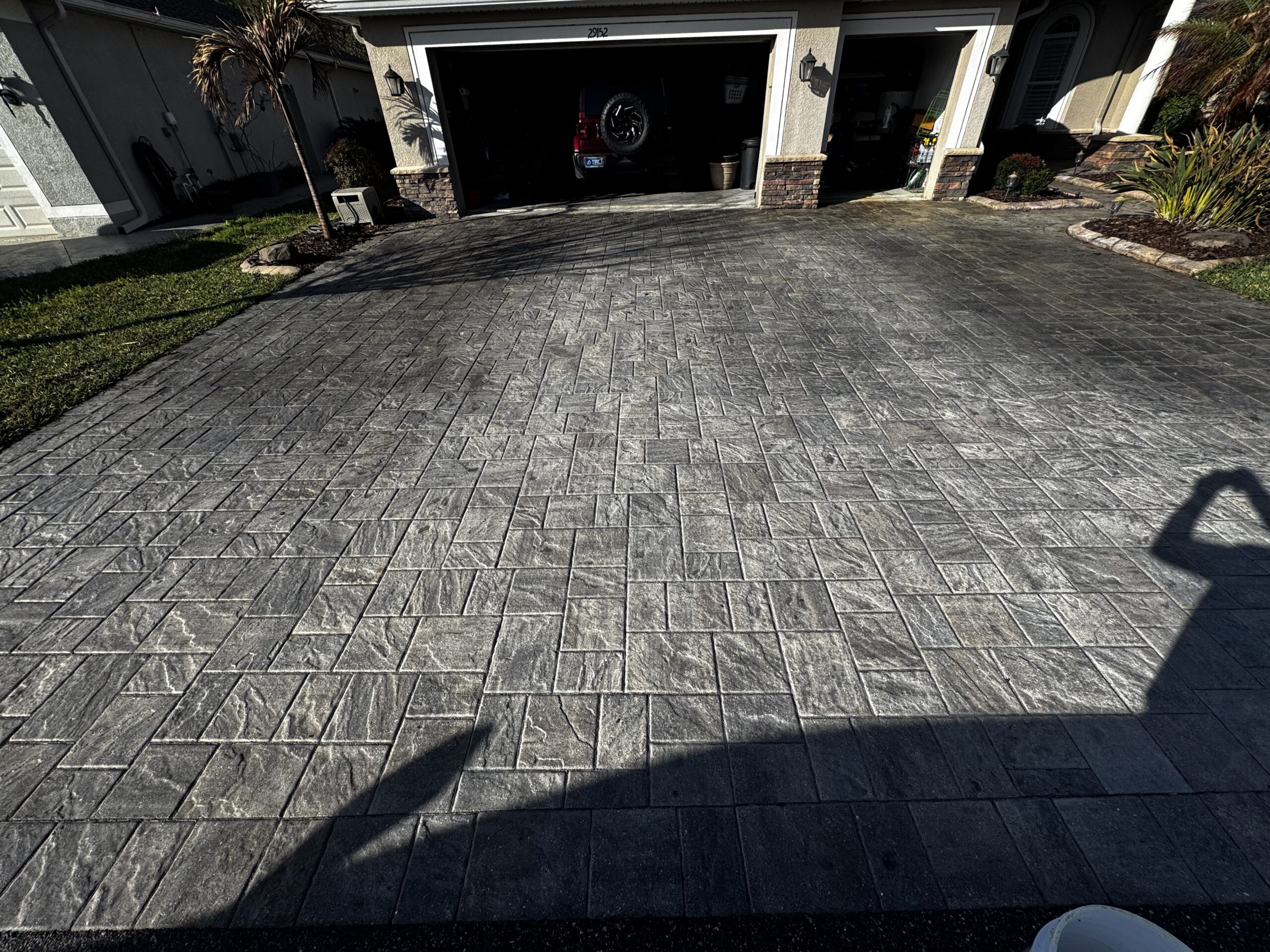
Pressure washing can remove dirt, organic buildup, and loose material when used appropriately, but it should not be assumed to remove a bonded coating evenly. Some areas may release while others remain firmly attached, leaving a patchwork surface.
Excessive pressure can also disturb joint sand, affect paver edges, or leave visible cleaning marks. Preparation should be selected for the actual coating and paver condition instead of relying on pressure alone as a universal solution.
When stripping may be considered
Stripping may be evaluated when the existing sealer is failing, incompatible, cloudy, heavily built up, or preventing a uniform result. The process is intended to remove or reduce the problematic coating so the underlying pavers can be assessed and prepared.
Not every worn driveway requires full stripping, and not every coating responds the same way. Test areas and a close inspection can help determine the scope. Homeowners should expect the contractor to consider the coating, paver type, joints, drainage, nearby landscaping, and safe handling of removed material.
What a small test area can reveal
A test area can show how the existing coating reacts to cleaning or correction, whether the color changes, and how much material remains. It may also reveal differences that are not obvious when the surface is dry.
A test does not guarantee that every square foot will behave identically. Driveways and patios often have variations in shade, wear, moisture, repairs, and previous application thickness. It is still useful because it provides direct information about the actual surface rather than relying only on a visual guess.
Joint sand should be evaluated too
Resealing decisions are not limited to the face of the pavers. Joint sand may be low, washed out, contaminated, or disturbed during cleaning and coating removal. New sand should not simply cover debris or unstable material in the joints.
The surface should be allowed to dry appropriately after cleaning and sanding. Moisture in the pavers or joints can affect timing, especially in shaded areas and during humid Florida weather.
Do not hide drainage or moisture problems
If water regularly ponds, flows across the same section, or reaches the pavers from irrigation, downspouts, or nearby drainage, identify that condition before resealing. A coating cannot correct grading or stop a recurring external water source.
Moisture-related symptoms may return if the source is not addressed. The contractor should know which areas stay damp longest so preparation and scheduling can be planned around actual site conditions.
What homeowners should ask before approving a reseal
- Is an existing coating still present across the surface?
- Does the old sealer appear securely bonded and compatible?
- Are cloudy, peeling, sticky, or uneven areas visible?
- Will a test area help determine the preparation needed?
- Is stripping being considered, and for which sections?
- What condition are the joints and existing joint sand in?
- Are drainage, irrigation, shade, or moisture affecting the surface?
- How long should the pavers remain free from water, foot traffic, and vehicles?
What to expect after failed-sealer correction
Correcting an old coating is about creating a sound, clean surface for the next step. The exact appearance can still vary because pavers age differently, repairs may remain visible, and some areas may have absorbed previous products or stains differently.
A realistic discussion should cover the current condition, the limits of correction, the desired finish, and the maintenance plan. Avoid treating a new topcoat as a shortcut when the layer underneath is unstable.
Need an existing paver sealer evaluated?
True Seal Paver Sealing can inspect the coating, pavers, joints, and moisture conditions before recommending a resealing approach. For guidance based on your driveway, patio, walkway, or pool deck, request a free estimate from True Seal Paver Sealing.
For more project help, compare True Seal paver sealing, paver stripping, travertine sealing, and concrete sealing.