
September 26, 2026
White Powder on Pavers: Efflorescence vs Failed Sealer in Florida
Learn how to distinguish possible efflorescence, mineral deposits, surface residue, and failed paver sealer before cleaning or resealing in Florida.
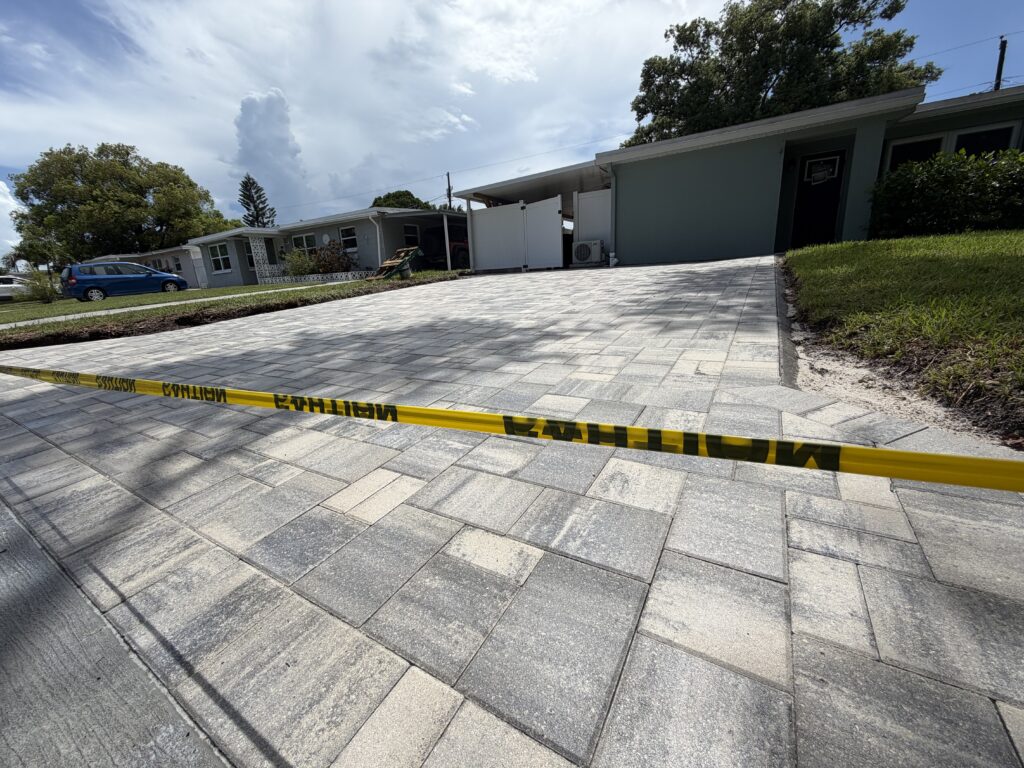
White or chalky material on pavers can be confusing. Homeowners may call it hard-water staining, efflorescence, faded color, or failed sealer, but those conditions do not all have the same cause or the same correction.
Before cleaning or resealing, the surface should be inspected closely. The location of the white material, whether the pavers have been sealed before, how the area reacts to water, and whether the condition returns can all help narrow down what is happening.
What is efflorescence?
Efflorescence is a mineral deposit that can appear when moisture moves through masonry materials and carries soluble salts toward the surface. As the moisture evaporates, a light-colored or powdery deposit may remain.
Its appearance can vary. Some areas look dusty or chalky, while others form a light haze. A visual inspection alone may not be enough to separate it from irrigation deposits, cleaning residue, or a cloudy coating.
Why moisture patterns matter
White deposits often provide clues about where water is traveling. Low areas, shaded sections, drainage paths, paver edges, and locations reached by sprinklers may behave differently from the rest of a driveway or patio.
Florida rain, humidity, irrigation, roof runoff, and slow-drying joints can keep some sections damp longer. Sealing without understanding the moisture source can cover the symptom while leaving the underlying pattern unchanged.
How failed sealer can look similar
An older coating may turn cloudy, white, patchy, or dull as it fails. Moisture beneath or within the coating can change the appearance, and worn areas may sit next to sections that still look glossy.
Unlike loose powder on an unsealed surface, failed sealer may feel like a bonded film, show peeling or flaking, or change appearance unevenly when wet. The previous coating history is important because the correction may involve coating removal rather than ordinary surface cleaning.
Irrigation deposits are another possibility
Sprinkler water can leave mineral residue where overspray repeatedly reaches the pavers. These marks often follow a border, arc, or repeated wetting pattern near landscaping. They may also appear on walls, curbing, or nearby surfaces reached by the same spray.
Adjusting the sprinkler coverage is part of solving the problem. Cleaning the deposit without changing the overspray can lead to a quick return.
Cleaning residue can create a temporary haze
If a cleaner was not removed completely or if the surface dried before it was rinsed as intended, residue may remain. Homeowners should share what products were recently used, including household cleaners, acids, weed treatments, or previous stain-removal attempts.
Do not combine more chemicals in an attempt to cancel out the first product. Unknown mixtures can create new reactions, affect plants, alter paver color, and complicate professional preparation.
Dry appearance and wet appearance both provide clues
Some white conditions become less visible when the pavers are wet and return as they dry. Others remain visible or become more obvious after wetting. A failed coating may also darken unevenly or show trapped-looking cloudy areas.
These observations are useful, but they are not a complete diagnosis by themselves. Note what happens and show the contractor rather than repeatedly soaking the surface immediately before an evaluation.
Do not seal over unidentified white material
New sealer should not be applied over powder, residue, mineral deposits, or a failing coating without appropriate preparation. The new layer depends on the surface beneath it for adhesion and appearance.
Sealing over contamination can make the white condition more noticeable or make later correction more involved. The surface should be cleaned, evaluated, and allowed to dry so the remaining condition is visible before application.
Why stronger pressure is not always the answer
High pressure may move loose material, but it can also disturb joint sand, damage paver edges, or create cleaning marks. It does not automatically remove a bonded sealer or solve moisture moving through the surface.
The cleaning method should match the suspected cause, paver material, coating history, joint condition, and nearby landscaping. A small test area can help show how the surface responds before a larger section is treated.
What a test area can reveal
A representative test area can help determine whether the white material is loose, bonded, within an old coating, or associated with repeated moisture. It may also show how much color variation remains after the surface is cleaned.
The test should include both affected and unaffected pavers when possible. That comparison helps identify whether the treatment is changing only the residue or also changing the surrounding finish.
Check the joints and edges
Moisture and deposits often follow joints, borders, low spots, and transitions near curbing or landscaping. Joint sand may be low, contaminated, or disturbed during cleaning.
New sand should not cover unstable material or unresolved buildup. After cleaning, the pavers and joints need appropriate drying time before the next step is considered.
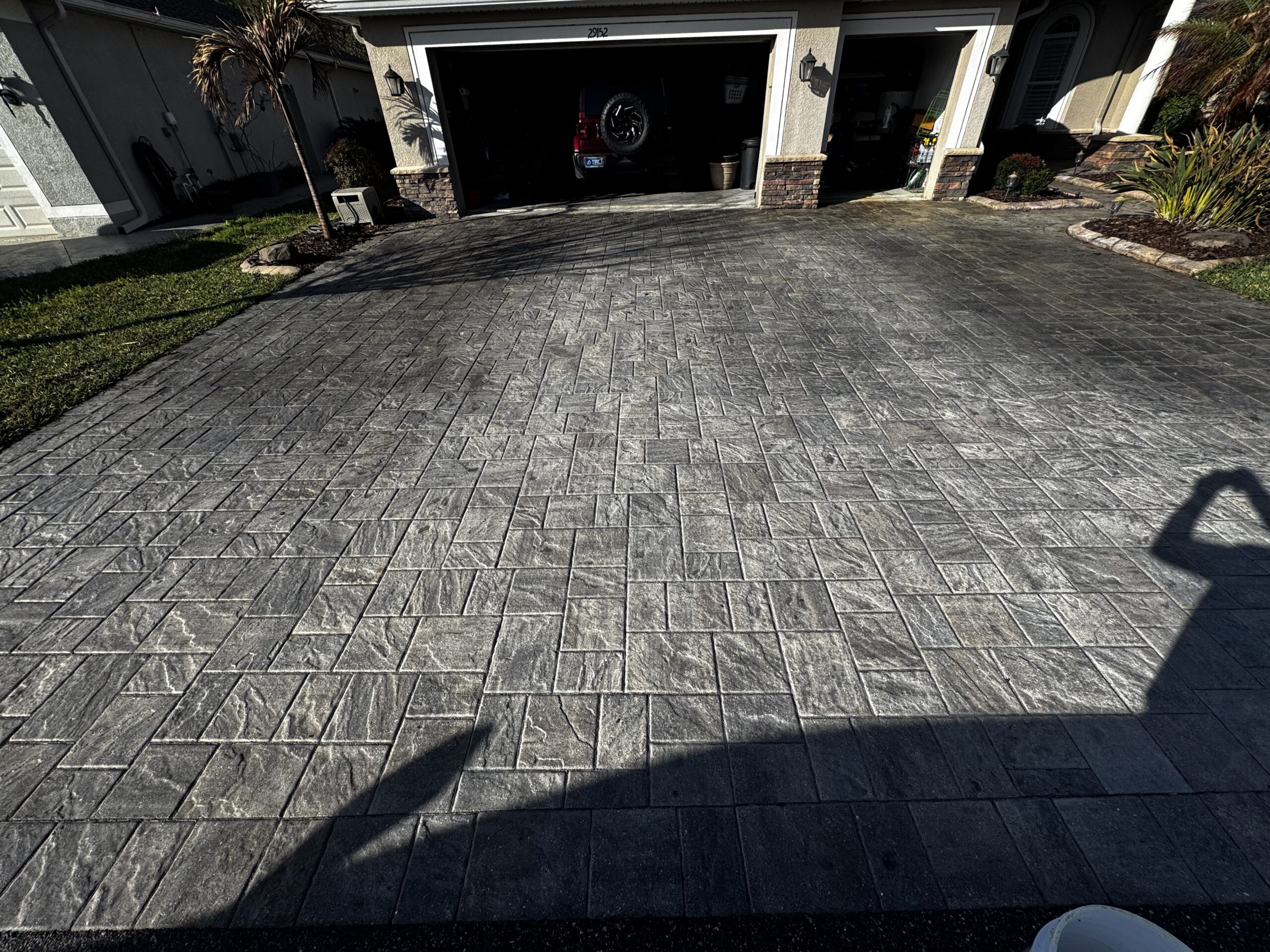
Questions homeowners should ask
- Has this surface been sealed before?
- Is the white material loose and powdery or bonded like a coating?
- Does it follow sprinkler, drainage, joint, or shaded-area patterns?
- Does the appearance change when the pavers are wet?
- Were cleaners, acids, or other chemicals recently applied?
- Is old sealer peeling, cloudy, sticky, or uneven?
- Would a test area help identify the preparation needed?
- What moisture source should be corrected before resealing?
When stripping may be considered
If the white appearance is within a failed coating, the project may require evaluation for coating removal rather than ordinary cleaning. Not every white deposit means stripping is needed, and not every coating responds the same way.
The decision should be based on the actual layer, how securely it is bonded, and whether it is compatible with the planned system. Avoid assuming that another coat will restore clarity.
Reducing the chance of recurrence
Correct irrigation overspray, improve obvious drainage issues, remove debris that keeps shaded areas damp, and follow maintenance guidance for the completed surface. These steps do not guarantee that every mineral deposit will disappear permanently, but they address common conditions that can keep the problem active.
Routine inspection is especially useful around low spots, borders, downspouts, and sprinkler lines. Early attention is easier than sealing over a condition that has not been identified.
Need white residue or cloudy sealer evaluated?
True Seal Paver Sealing can inspect the pavers, joints, existing coating, and moisture patterns before recommending cleaning, correction, or sealing. For guidance based on your driveway, patio, walkway, or pool deck, request a free estimate from True Seal Paver Sealing.
For more project help, compare True Seal paver sealing, paver stripping, travertine sealing, and concrete sealing.