
September 25, 2026
Tire Marks on Paver Driveways: What to Know Before Sealing
Learn why tire marks, vehicle residue, old sealer, heat, and turning areas should be evaluated before cleaning and sealing a Florida paver driveway.
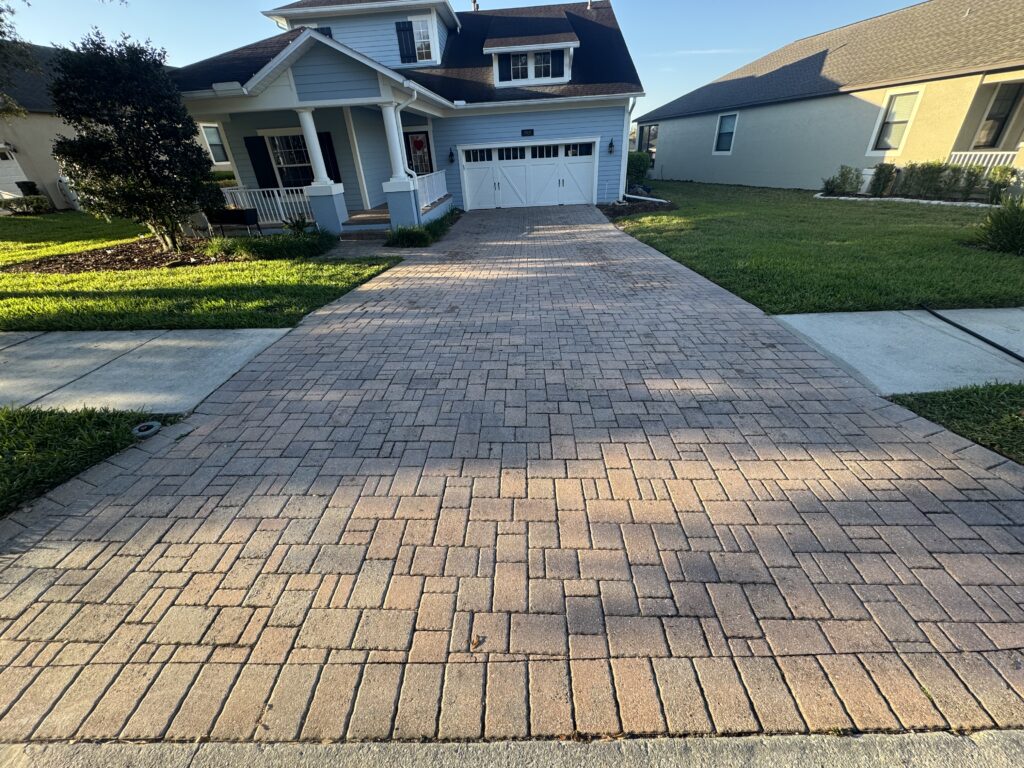
Tire marks on a paver driveway are not always ordinary surface dirt. Heat, vehicle weight, turning, rubber transfer, fluid residue, old sealer, and the texture of the pavers can all affect how the marks form and how difficult they are to remove.
Florida homeowners may notice dark arcs near the garage, marks where vehicles turn, or repeated discoloration in the same parking positions. Before the driveway is sealed, those areas should be inspected and cleaned appropriately. Sealer should not be used as a way to cover vehicle residue.
Why tire marks appear on pavers
Tires can transfer rubber and road residue to the driveway, especially where a vehicle turns while moving slowly or where the tires are warm after driving. The paver texture can catch that material, and porous surfaces may hold visible residue differently from smooth concrete.
Marks may be more noticeable on lighter pavers or on sections with uneven wear. A driveway that has been sealed before can also respond differently because the residue may sit on top of a coating, become embedded in a worn layer, or collect where sealer has softened or deteriorated.
Turning areas usually show the most wear
Vehicles place more sideways force on the surface when the steering wheel is turned at low speed. That is why curved tire marks often appear near garages, turnaround areas, and narrow driveway entrances.
These zones also receive repeated traffic in nearly the same path. Over time, the pavers, joints, and existing sealer may look different from low-traffic borders. A contractor should evaluate the whole pattern instead of treating one dark line as an isolated stain.
Not every dark mark comes from rubber
Oil, brake dust, road film, irrigation deposits, leaf staining, mildew, and old coating can create dark or discolored areas that resemble tire transfer. A parked vehicle may also hide a leak that repeatedly affects the same spot.
Identify the likely source before choosing a cleaning method. If the mark returns after cleaning, check for an active vehicle leak, recurring moisture, or a coating problem rather than assuming the pavers simply need stronger pressure.
Existing sealer changes the cleaning decision
If the driveway has an older coating, tire residue may be attached to the sealer rather than directly to the paver. Cloudy, peeling, sticky, or unevenly glossy sections can indicate that the coating itself needs attention.
A cleaner that affects the residue may also affect the old sealer. Likewise, aggressive scrubbing or pressure may remove weak coating in patches while leaving other areas intact. The existing layer should be evaluated before stain treatment and resealing are planned.
Why sealing over tire marks can make them harder to correct
A new sealer may deepen the color of the pavers and increase contrast around existing marks. If residue or contamination remains on the surface, covering it can also complicate later removal.
The surface should be cleaned and allowed to dry so the remaining condition can be reviewed before application. Some long-standing discoloration may not disappear completely, and that possibility should be discussed before the driveway is sealed.
Pressure alone is not a complete cleaning plan
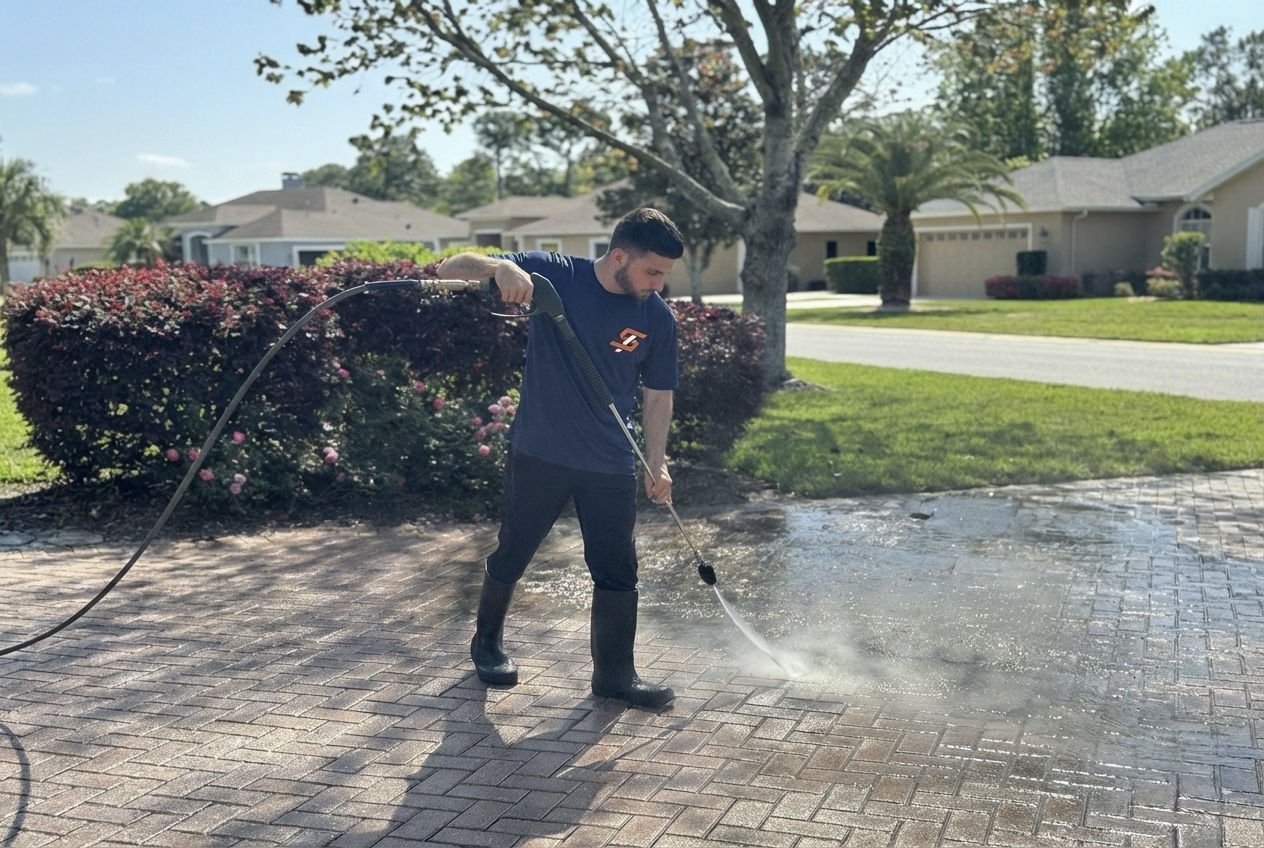
Pressure washing can remove loose dirt and buildup when used properly, but more force is not automatically better for tire marks. Excessive pressure can disturb joint sand, damage paver edges, or leave visible cleaning patterns.
The cleaning approach should consider the paver material, old sealer, stain source, nearby landscaping, and joints. Homeowners should avoid experimenting with strong household chemicals immediately before professional service because residue can interfere with preparation.
A test area can prevent surprises
A small test area can show whether the mark is on the surface, within an old coating, or absorbed more deeply. It can also reveal how the paver color changes after cleaning and whether the surrounding area will need to be treated for a more even appearance.
The most useful test area includes part of the mark and part of the adjacent paver. That comparison helps show whether cleaning is changing only the residue or also changing the finish around it.
Check the joints in vehicle traffic lanes
Tire paths and turning areas can also show low or displaced joint sand. Cleaning may remove additional loose material, so the joints should be evaluated after the surface is prepared.
New sand should not cover oil, rubber residue, organic debris, or unstable material. The pavers and joints also need appropriate drying time before sealing, especially after thorough cleaning.
Florida heat can affect what homeowners see
Direct sun can heat both tires and pavers. Marks may become more noticeable in hot turning zones or near a garage where vehicles arrive after driving. Shade can create a different issue by slowing drying and supporting moisture-related discoloration.
The driveway should be inspected across sunny and shaded sections. A mark that looks uniform from a distance may involve different conditions when viewed closely.
Prevent active leaks before sealing
If oil, coolant, or another automotive fluid is reaching the driveway, address the source before the sealing appointment. Cleaning the pavers without correcting the leak can lead to immediate new contamination.
Tell the contractor where the vehicle normally parks and what type of residue you have observed. Do not assume that all automotive stains can be removed completely or that sealing will prevent every future mark.
Ways to reduce future tire marking
- Avoid turning the steering wheel while the vehicle is completely stationary when practical.
- Check frequently parked vehicles for active fluid leaks.
- Address fresh residue before it remains through repeated heat and rain cycles.
- Keep the driveway free of sand, leaves, and grit that can mix with vehicle residue.
- Use maintenance methods appropriate for the pavers and existing sealer.
- Have sticky, cloudy, or peeling coating evaluated before another application.
Will sealing stop all tire marks?
Sealing may change how the surface responds to routine maintenance, but it does not stop tires from contacting the driveway or vehicles from depositing road residue. Turning, heat, traffic, and leaks can still affect the finish.
Homeowners should ask how to maintain the completed surface and which cleaners are appropriate. Prompt attention is generally easier than waiting for repeated buildup to become a larger correction project.
Need tire marks evaluated before paver sealing?
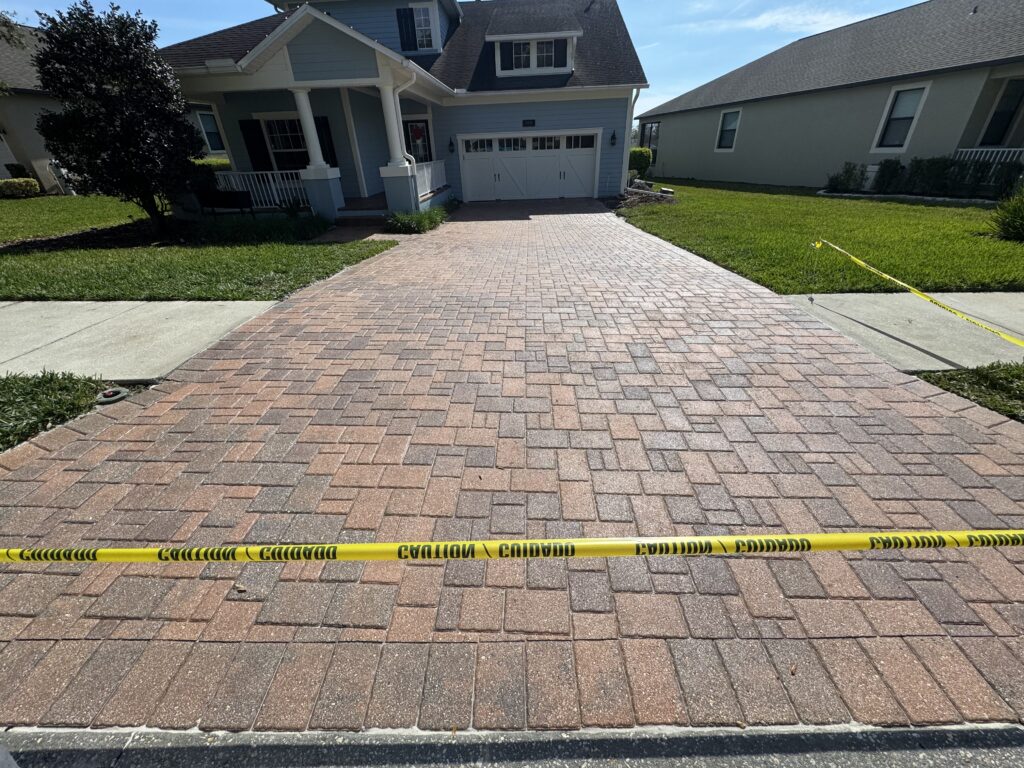
True Seal Paver Sealing can inspect the pavers, traffic areas, joints, stains, and existing coating before recommending cleaning or sealing. For guidance based on your driveway, request a free estimate from True Seal Paver Sealing.
For more project help, compare True Seal paver sealing, paver stripping, travertine sealing, and concrete sealing.