
September 23, 2026
Leaf Stains on Florida Pavers: What Homeowners Should Do Before Sealing
Learn how leaves, tannins, shade, organic buildup, and recurring moisture can affect Florida pavers—and why the cause should be addressed before sealing.
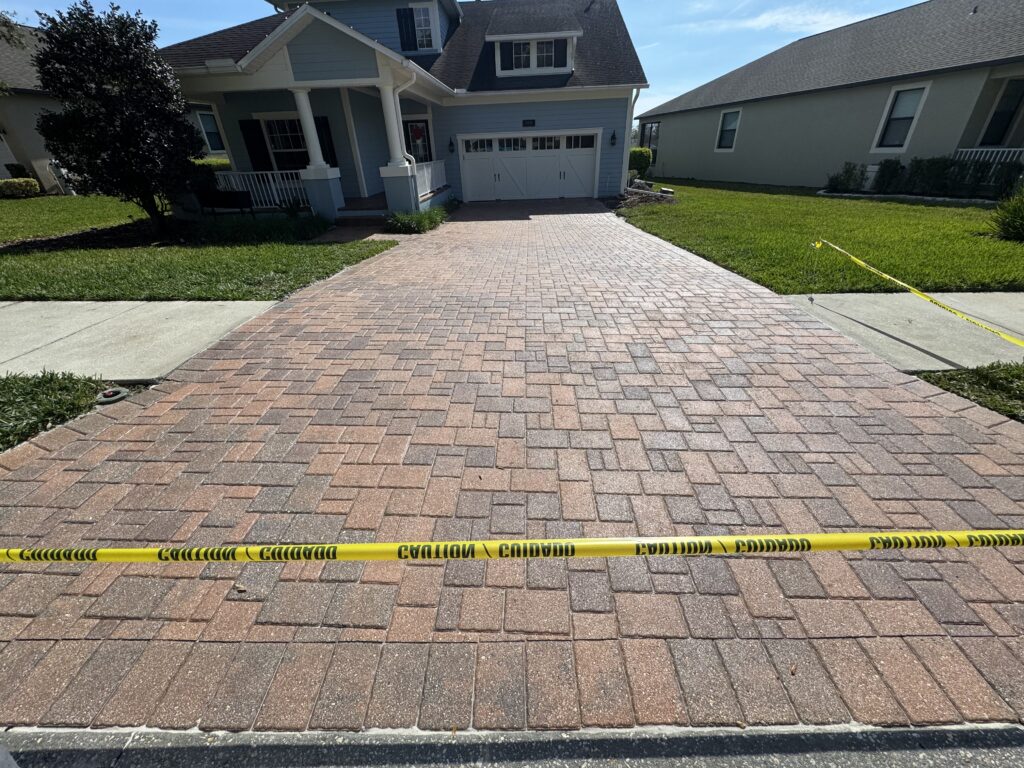
Leaves and small tree debris may look harmless on a driveway, patio, or walkway, but Florida heat, humidity, rain, and irrigation can turn that buildup into dark marks and recurring organic growth. When wet leaves remain on pavers, natural pigments and debris can settle into the surface and joints.
Homeowners often ask whether sealing will hide leaf stains. The better question is what caused the discoloration and whether the surface has been properly cleaned, evaluated, and dried. Sealer should not be used to cover active buildup or an unresolved moisture pattern.
Why leaves can stain pavers
Leaves contain natural compounds that can transfer color as they break down. When a damp leaf rests on a porous surface, water can carry that color into the face of the paver. Repeated wetting from rain or sprinklers can deepen the mark.
The effect is not limited to large leaves. Flower petals, seed pods, berries, palm debris, mulch, and small pieces of bark can also leave organic residue. Shaded sections may be affected more because they dry slowly and allow debris to remain damp longer.
Leaf stains are different from ordinary dirt
Loose dust and soil may lift during routine cleaning, while tannin-like discoloration can remain after the debris is gone. Dark marks can also be confused with mildew, irrigation deposits, oil, old sealer, or moisture trapped under a coating.
Because several conditions can look similar, homeowners should avoid assuming that every brown or black mark needs the same treatment. The surface should be inspected in both dry and wet conditions, and any old coating should be considered before a cleaner is selected.
Why shade makes recurring stains more likely
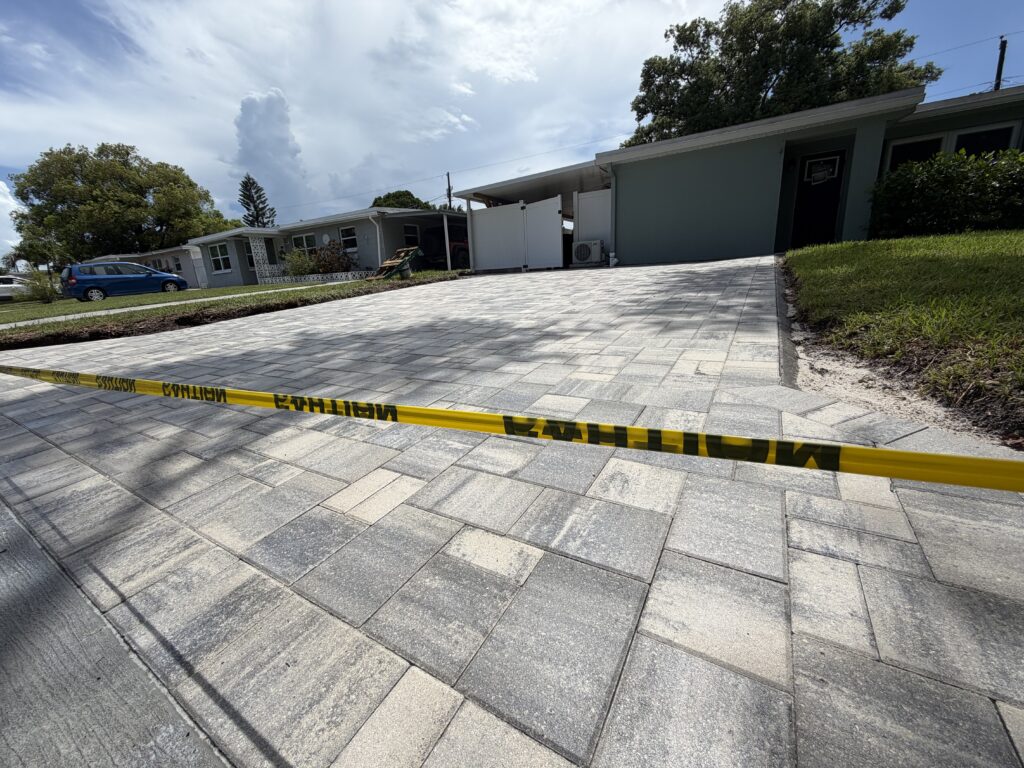
Shade is not a problem by itself, but it changes drying time. Pavers beneath trees, roof lines, fences, or dense landscaping may stay damp after nearby sunny sections have dried. That extended moisture can support organic buildup and keep leaf residue in contact with the surface.
Shaded joints may also remain darker than the paver faces. Before sealing, the contractor should know which areas dry slowly and whether irrigation, drainage, or roof runoff adds more water to those sections.
Remove the source before treating the mark
Cleaning a stain without changing the conditions that created it can lead to a quick return. Trim back vegetation when practical, clear gutters and downspouts, adjust irrigation that repeatedly wets the pavers, and remove leaves before they sit through multiple wet-and-dry cycles.
Do not make major landscaping changes immediately before service if they will cover the pavers with fresh soil, mulch, or clippings. The goal is to reduce recurring debris while keeping the work area clean and accessible.
Be careful with household stain-removal advice
Online cleaning tips often recommend strong acids, bleach mixtures, or unrelated household products without considering the paver material, color, nearby plants, joint sand, or existing sealer. A method that changes one stain may also change the surrounding pavers.
Mixing chemicals or applying an unknown product can create residue and complicate professional preparation. If a stain is persistent, identify the likely source and let the cleaning method be chosen for the actual surface rather than experimenting immediately before sealing.
Check whether old sealer is trapping the problem
If the pavers have been sealed before, discoloration may be on top of the coating, within worn sections, or beneath a failing layer. Cloudy areas, peeling, uneven gloss, and patches that react differently to water are reasons to inspect the existing sealer closely.
Adding a new coat does not remove contamination beneath it. If the older coating is unstable or incompatible, correction may require more than surface washing. A small test area can help show how the coating and stain respond to preparation.
Protect the joints during cleaning
Leaves and organic material can collect in joints where they are harder to remove. At the same time, aggressive washing can displace loose joint sand. The joints should be cleaned and evaluated as part of the surface, not treated as an afterthought.
After cleaning, the contractor can determine whether sand is low, contaminated, or ready for the next step. New sand should not simply cover decaying debris or unstable material.
Why sealing over a visible stain is risky
Sealer can deepen the appearance of pavers, which may make some stains look darker or more noticeable. It can also make later correction more involved if the discoloration becomes covered by a new coating.
The realistic goal is to clean and correct the surface as much as the paver condition allows, then discuss any remaining variation before sealing. Some long-standing marks, repairs, and material differences may remain visible.
Plan for adequate drying time
Cleaning removes contamination but also introduces water. Florida humidity, shade, recent rain, and damp joints can extend the time needed before sealing. A surface that looks dry in direct sun may still hold moisture in protected sections.
Sprinklers, pool splash, roof runoff, and air-conditioner discharge should stay off the work area for the period recommended for the project. The application schedule should follow the actual surface and forecast rather than a fixed assumption.
How to reduce future leaf staining
- Sweep or blow leaves away before they remain wet for long periods.
- Pay extra attention to shaded corners and areas below dense trees.
- Keep gutters and downspouts from repeatedly washing debris across pavers.
- Review sprinkler coverage that keeps one border constantly damp.
- Remove fallen fruit, seed pods, petals, and mulch promptly.
- Use maintenance methods appropriate for the paver and existing sealer.
- Have recurring dark or cloudy areas evaluated before adding another coat.
Does sealer prevent every future stain?
Sealing may support easier maintenance on a properly prepared surface, but it does not stop leaves from dropping or eliminate the need for cleaning. Organic debris can still sit on top, collect in low areas, and discolor a surface if it remains wet.
Maintenance habits matter after sealing. Prompt debris removal and appropriate cleaning help keep buildup from becoming a larger correction project.
When to request a professional evaluation
Ask for an inspection when stains remain after normal maintenance, return in the same damp locations, appear beneath old sealer, or cover large sections of the surface. Also point out low areas, drainage paths, shade, sprinklers, and previous coating history.
True Seal Paver Sealing can evaluate the pavers, joints, existing sealer, staining, and moisture conditions before recommending cleaning or sealing. For guidance based on your property, request a free estimate from True Seal Paver Sealing.
For more project help, compare True Seal paver sealing, paver stripping, travertine sealing, and concrete sealing.