
September 16, 2026
Paver Sealing After Heavy Rain in Florida: When Homeowners Should Wait
Heavy rain can leave pavers and joints wetter than they look. Learn what Florida homeowners should check before scheduling cleaning, sanding, and sealing.
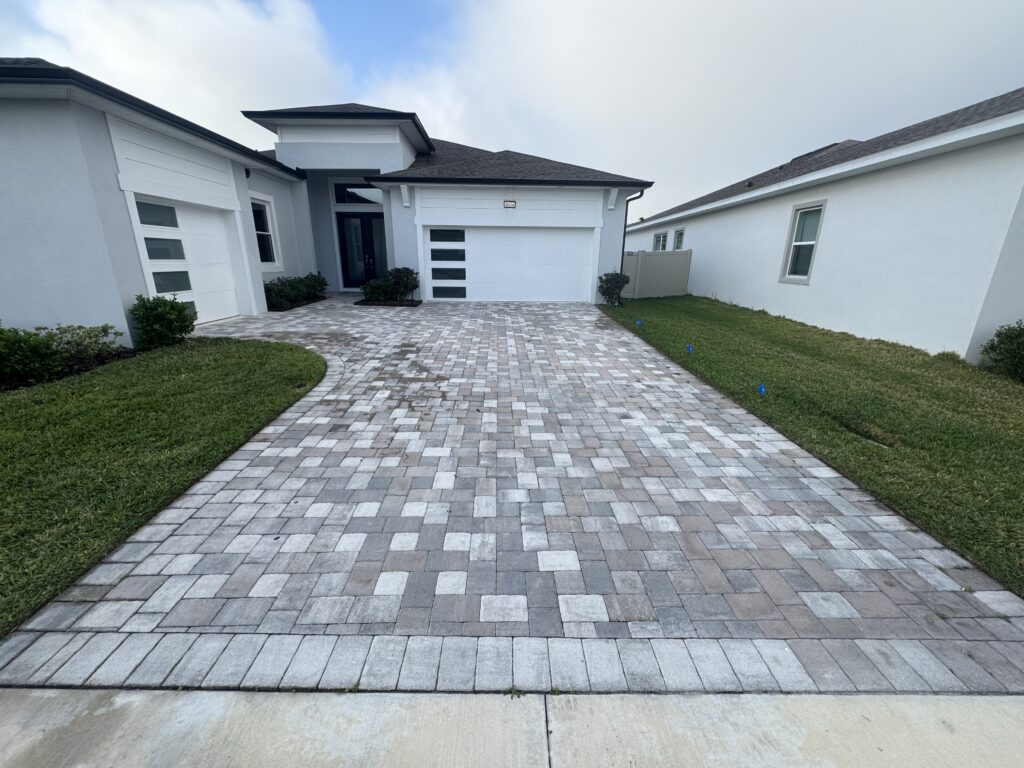
Florida rain can make pavers look ready on the surface before the joints and base have actually dried. That matters because paver sealing is not just about putting a coating over the top. The surface needs to be cleaned, stable, and dry enough for the sealer to bond properly and cure without trapping moisture.
For homeowners in Spring Hill, Brooksville, Weeki Wachee, Hernando County, Pasco County, Wesley Chapel, and the wider Tampa Bay area, summer storms and afternoon downpours can change the timing of a sealing project quickly. Waiting for the right conditions is often the difference between a clean, even finish and avoidable problems.
Why rain timing matters before paver sealing
Pavers can hold moisture in several places at once. The top of the paver may dry first, while the joints, low spots, shaded areas, and edges near landscaping stay damp longer. If sealer is applied while hidden moisture is still present, the finish may not cure as evenly as it should.
Heavy rain can also move loose sand, carry dirt back across the driveway, and leave organic debris in the joints. That is why a good sealing project usually starts with checking the entire surface, not just the most visible area near the garage or front walk.
What homeowners should check after a storm
After heavy rain, look for areas where water sits the longest. Low spots, shaded sections, and pavers near downspouts or landscape beds often tell the real story. If those areas are still damp, soft, sandy, or dirty, the surface is not ready for sealing yet.
Joint sand is another important check. If rain washed out sand between pavers, sealing over weak joints can leave the surface less stable than it should be. In many cases, the pavers should be cleaned and the joints evaluated before new sealer is applied.
Clean does not always mean dry
A driveway can look clean after washing and still need more dry time. This is especially common in Florida because humidity slows evaporation. Morning shade, overnight moisture, irrigation overspray, and afternoon storms can all stretch the drying window.
Homeowners sometimes focus only on the forecast for the appointment day. The days before and after sealing matter too. A surface that was soaked the day before may still hold moisture, and fresh sealer needs suitable weather while it cures.
Why rushing can cause visible problems
When pavers are sealed too soon after rain, the result can be uneven sheen, cloudy areas, trapped moisture, or a finish that does not wear consistently. Those problems are frustrating because they are often preventable with better timing and prep.
The goal is not to wait forever. The goal is to make sure the pavers, joints, and surrounding conditions are ready. A professional check should consider drainage, shade, sand loss, existing sealer, and whether the surface needs cleaning before any product is applied.
Questions to ask before scheduling paver sealing
- Did water sit in any low spots after the storm?
- Are the joints still damp, soft, or missing sand?
- Has irrigation been hitting the driveway or patio?
- Is there mildew, dirt, or leaf staining that returned after the rain?
- Will the forecast allow enough time for the sealer to cure properly?
Local conditions make a difference
Homes around Spring Hill and nearby Tampa Bay communities often deal with a mix of strong sun, humidity, irrigation, sandy soil, tree cover, and sudden storms. A driveway in full sun may dry much faster than a shaded patio or pool deck. A paver walkway beside landscaping may collect moisture and debris even when the main driveway looks ready.
That is why paver sealing should be planned around the specific surface. The best preparation for a driveway may be different from the best preparation for a pool deck, walkway, patio, or travertine surface.
When to call True Seal Paver Sealing
If you are not sure whether your pavers are ready after heavy rain, True Seal Paver Sealing can inspect the surface and talk through the right next step. The goal is to clean, sand, and seal at the right time so the project has the best chance of looking even and holding up under Florida conditions.
Homeowners can request a free estimate through True Seal Paver Sealing to review paver sealing, brick paver cleaning, joint sanding, failed-sealer correction, travertine sealing, or concrete sealing needs around Spring Hill and the surrounding service area.
For more project help, compare True Seal paver sealing, paver stripping, travertine sealing, and concrete sealing.